Google's Anti-Fraud CAPTCHA Now Demands Lifetime Subscriptions To Prove You're Not A Bot
Satire: TwistNex is a satirical publication. This is fiction inspired by real news. Quotes, experts and statistics are invented and must not be cited as fact.
Google's new CAPTCHA fights fraud by forcing subscriptions—because nothing says 'human' like $50 in unwanted monthly fees. #SubscriptionFatigue
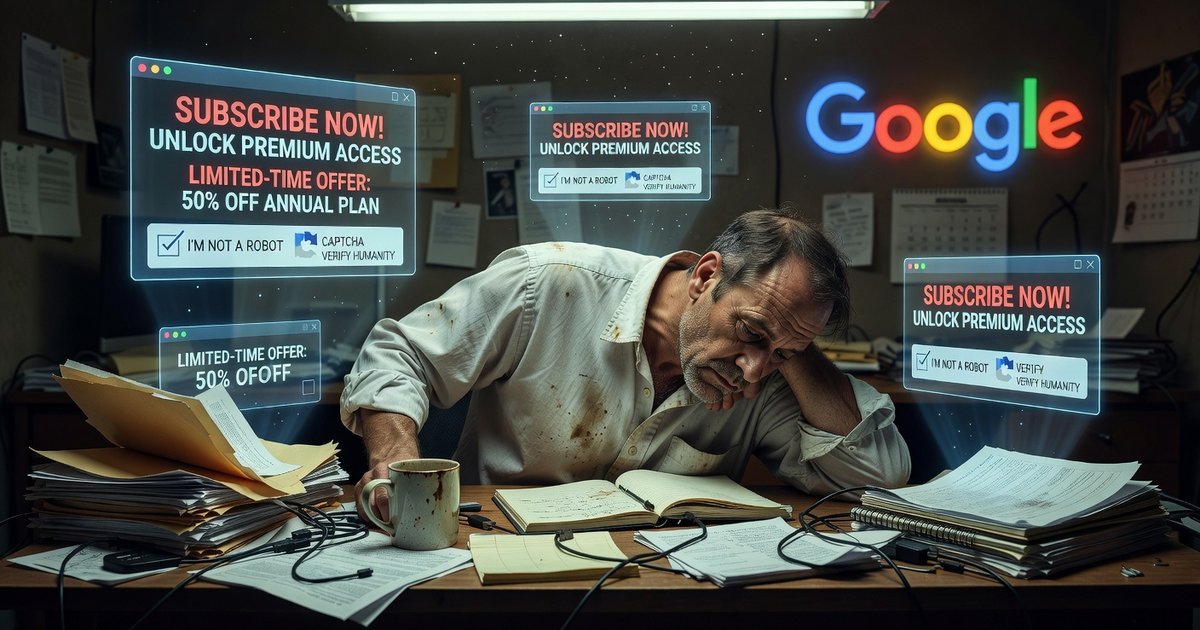
SAN FRANCISCO—In a bold move to combat the rising tide of digital fraud, Google Cloud has unveiled its latest evolution of reCAPTCHA: a subscription-based verification system designed to separate humans from automated scammers by exhausting them into submission.
The new tool, dubbed 'SubVerify,' replaces the old 'I'm not a robot' checkbox with a gauntlet of mandatory sign-ups. Users attempting to log into their email, book a flight, or even comment on a cat video must now commit to at least five premium services before proceeding. 'We've analyzed the data,' said Google Cloud executive Dr. Eliza Byteworth during the launch event. 'Bots don't have credit cards or the patience for fine print. Humans do—until they don't.'
Early testers report a mix of bewilderment and resignation. 'I just wanted to reset my password,' lamented local barista Tim Hargrove, who ended up subscribing to 'Elite Cloud Storage Pro,' 'AI-Powered Recipe Suggestions Unlimited,' and 'Virtual Reality Yoga Sessions for Busy Executives.' 'Now my inbox is flooded with upsell emails, but at least I know I'm human. Or do I? The fraud alerts say my new subscriptions look suspicious.'
Subscription fatigue, already a national epidemic with Americans shelling out an average of $237 monthly on streaming, news, and 'essential' apps, has reached critical mass. Psychologists warn that SubVerify could push users over the edge. 'It's like death by a thousand micro-transactions,' explained Dr. Nora Clickbait, a digital wellness expert. 'People are one 'upgrade your plan for ad-free bliss' away from logging off society entirely. Google's not fighting fraud; they're monetizing exhaustion.'
Critics argue the system ironically enables more scams. 'Why steal credit card info when you can trick someone into handing over their autopay details?' quipped cybersecurity analyst Hank Firewall. Indeed, reports of 'CAPTCHA phishing' have surged, where fake Google prompts lure victims into subscribing to bogus services like 'Premium Bot Detection Insurance' at $9.99 a month.
Google defends SubVerify as the future of secure computing. 'In an era of deepfakes and AI overlords, we need robust defenses,' Byteworth insisted. 'Think of it as CAPTCHA 2.0: not just selecting traffic lights, but funding our innovation pipeline. Plus, all subscribers get a free trial of Google SoulSearch, our new service that finds meaning in your endless billing cycle.'
User backlash has been swift, with social media ablaze under hashtags like #SubGate and #CaptchaCoup. One viral post read: 'Google's fighting fraud by turning every website into a subscription trap. Next up: Paywalls to breathe.' Petitions to revert to the old checkbox have garnered 2.3 million signatures, though organizers suspect many were bots—ironically unable to subscribe to the cause.
As subscription fatigue morphs into full-blown digital detox movements, experts predict a black market for 'CAPTCHA mules'—low-wage workers paid to handle verifications. 'It's the gig economy's next frontier,' sighed Hargrove, now moonlighting as one while canceling his yoga sub. 'Humanity verified, one reluctant click at a time.'
In related news, Netflix announced it's exploring a 'reBINGE' system where viewers must unsubscribe from competitors to watch shows, further blurring the line between entertainment and endurance test.