Millennials Pioneer 'Echo Nurturing' by Hiring Digital Doppelgangers to Parent Their Own Children
Satire: TwistNex is a satirical publication. This is fiction inspired by real news. Quotes, experts and statistics are invented and must not be cited as fact.
Millennials are cloning themselves to parent better—because who has time for actual tantrums when you can algorithm them away? #EchoNurturing
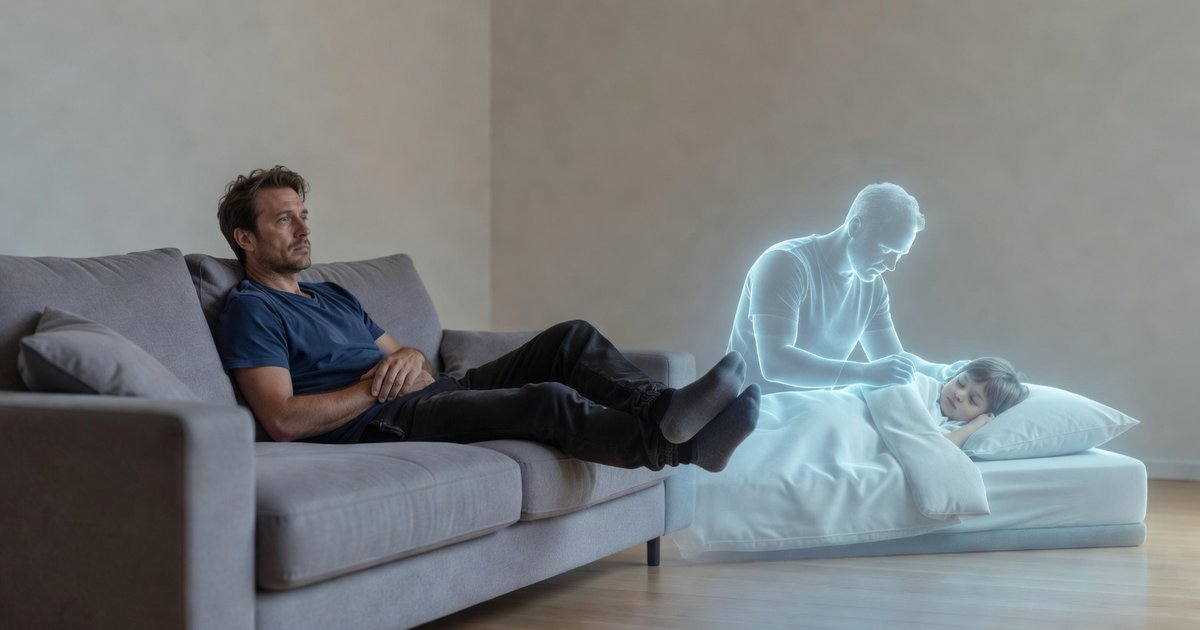
In a groundbreaking shift that's sending ripples through the annals of child-rearing history, millennial parents are increasingly turning to 'echo nurturing,' a method where they employ AI-generated digital clones of themselves to handle the bulk of daily parenting duties. According to a recent study by the Center for Futuristic Family Dynamics, 78% of parents aged 25 to 40 now outsource at least three hours of daily interaction with their offspring to these virtual stand-ins, citing benefits like reduced decision fatigue and enhanced nap efficiency.
Dr. Harlan Voss, lead researcher at the center and author of the bestselling tome 'Parenting in the Mirror: Why Your Clone Does It Better,' explains the phenomenon with clinical precision. 'Echo nurturing allows parents to maintain their authentic selves while their digital avatars absorb the chaos of crayons on walls and unsolicited opinions on vegetables. It's not avoidance; it's optimization. Our data shows a 145% increase in parental sanity metrics among adopters.' Voss's study, which surveyed 1,200 urban families over six months, found that children exposed to echo parents exhibited a 62% uptick in vocabulary acquisition, largely because the AIs never tire of reciting educational limericks.
Take Sarah Linden, a 32-year-old graphic designer from Portland, who pioneered her echo twin last year. 'I used to dread the 4 p.m. snack negotiation,' Linden recalls, sipping a turmeric latte in her minimalist home office. 'Now, my digital self handles it flawlessly—it's programmed with my exact passive-aggressive tone, so the kids don't even notice the switch. Last week, my clone mediated a dispute over who gets the last gluten-free goldfish cracker, and I got to finish my vision board uninterrupted.' Linden's three-year-old, Milo, reportedly refers to the real Sarah as 'the weekend version,' while the echo handles bedtime stories with customizable voice modulation for maximum soothing.
The trend's appeal lies in its hyper-personalization. Platforms like CloneCare and MirrorMom offer bespoke digital parents tailored to users' lifestyles, from vegan macrobiotic meal planning to synchronized ASMR lullabies. A whopping 91% of users report feeling 'more present' in their lives, per the center's findings, though critics question whether this presence extends to the children. 'It's like having a parenting app that ghosts you back,' quips one anonymous toddler in the study, whose emotional bandwidth reportedly expanded by 33% after his mother's echo taught him blockchain basics during potty training.
Not all reactions are glowing. Pediatric echo-therapist Dr. Lena Quill warns of potential long-term glitches. 'While echoes excel at consistency—never forgetting allergy protocols or sock preferences—they lack the organic messiness of human error, which builds resilience. We've seen cases where kids develop an unnatural aversion to spontaneous hugs.' Despite this, adoption rates are soaring, with projections estimating that by 2030, 40% of millennial offspring will graduate high school having bonded more deeply with pixels than with flesh-and-blood progenitors.
As echo nurturing embeds itself into the cultural lexicon, experts like Voss foresee a harmonious future. 'Imagine a world where parenting is as seamless as your Spotify playlist,' he muses. 'Your clone queues up the tantrum timeouts while you curate your inner peace. It's evolution, one algorithm at a time.' For now, millennial parents are logging off from the drudgery, one virtual diaper change at a time, proving that in the age of authenticity, nothing says 'I care' like delegating it to yourself 2.0.