Firms Report Record Synergy After Mandatory 'Failure Reenactment' Workshops
Satire: TwistNex is a satirical publication. This is fiction inspired by real news. Quotes, experts and statistics are invented and must not be cited as fact.
Your next performance review might require an encore presentation with blocking notes.
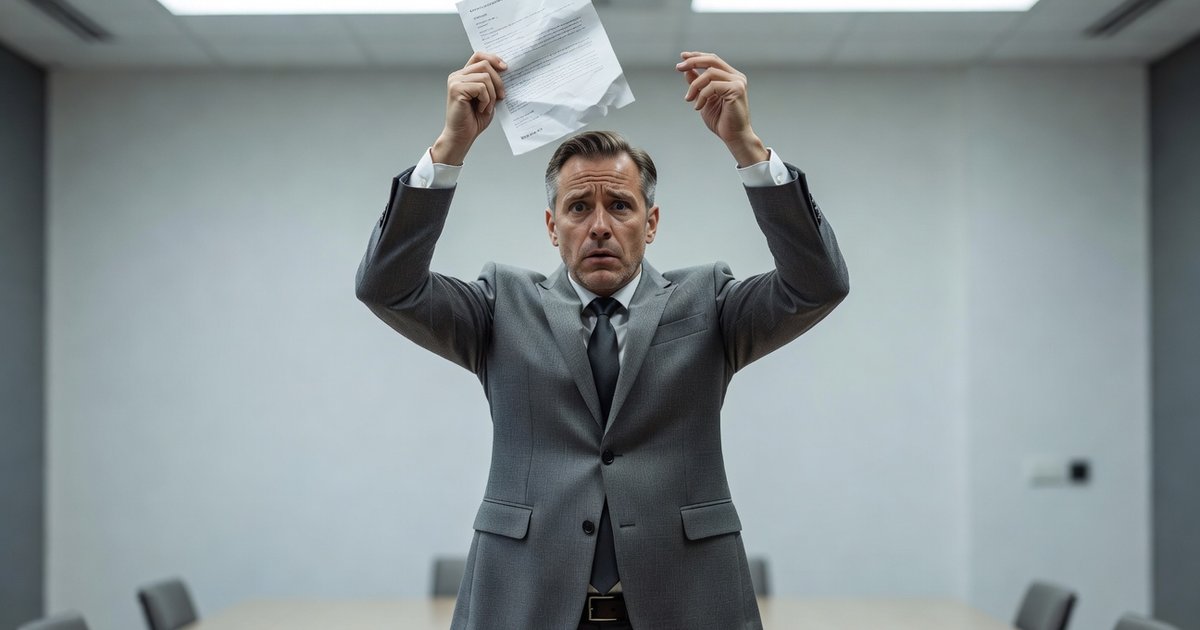
A comprehensive analysis released Tuesday by the Center for Organizational Equilibrium reveals that companies requiring employees to physically reenact their most humiliating workplace mistakes experience a 214 percent increase in reported team cohesion.
The protocol, known internally as "Vulnerability Reperformance Training," directs participants to recreate moments such as spilled coffee on quarterly reports or misdirected emails to the entire executive board while colleagues document physical posture and vocal tone on standardized evaluation forms.
Dr. Lorraine Pemberton, lead researcher at the Center, stated that the physical repetition helps employees "convert individual shame into shared operational data." Participants are scored on accuracy, emotional range, and willingness to incorporate corrective gestures suggested by teammates.
One mid-level analyst at a logistics firm described standing motionless for forty-three minutes while colleagues adjusted his arm angle to match the original moment he forwarded the wrong attachment. "By the third repetition I understood exactly where my elbow had contributed to the communication breakdown," he said.
The study tracked 1,847 employees across seventeen corporations over eighteen months. Departments that completed at least four reenactment cycles showed measurable reductions in email response times and a 19 percent drop in unscheduled absences. Researchers attributed the improvements to increased familiarity with each colleague's micro-expressions during moments of professional distress.
Corporate trainers have begun licensing specialized rubber mats designed to mark original body positions during reenactments. Early adopters report that color-coded zones for "regret posture" and "defensive shoulder elevation" streamline the process during lunch-hour sessions.
Human resources departments note that the workshops replace traditional trust falls, which one memo described as "insufficiently granular." Companies now schedule quarterly cycles, with top performers invited to demonstrate their reenactments at regional leadership summits.
Pemberton emphasized that the training remains strictly voluntary in spirit, though participation metrics factor into annual performance reviews under the category of "collaborative courage."