Study Finds Logic Useless Against Existential Dread Of Food Delivery Wait Times
Satire: TwistNex is a satirical publication. This is fiction inspired by real news. Quotes, experts and statistics are invented and must not be cited as fact.
When your stomach's rumbling and logic fails: why faith in food delivery outlasts reason itself. A satirical dive into hunger's holy hour.
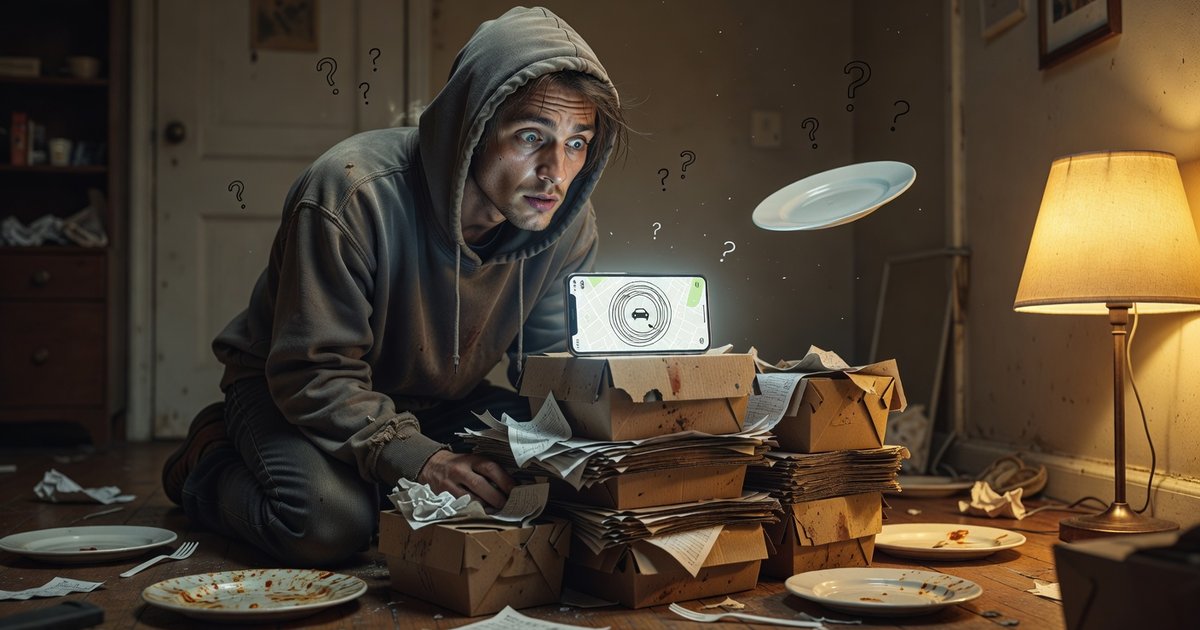
In a groundbreaking revelation that has left philosophers and DoorDash users alike scratching their heads, researchers have discovered that no amount of analytical thinking can dispel the deep-seated religious fervor inspired by waiting for your pad thai. The study, published in the Journal of Prolonged Starvation and App Notifications, provides irrefutable evidence that faith in the punctual arrival of overpriced lo mein transcends the feeble grasp of human reason.
Participants in the experiment, a diverse group of 500 ravenous millennials and one confused boomer who thought 'delivery' meant the stork, were subjected to increasingly sophisticated logical interventions while their stomachs growled in protest. 'We started with basic deductions,' explained lead researcher Dr. Elena Hungerford, a noted expert in the metaphysics of missing burritos. 'Things like, "If the app says 25 minutes, and it's been 47, perhaps the driver is circling the block for dramatic effect." But no dice. Their belief in the divine intervention of a five-star-rated courier remained unshaken.'
As the wait times stretched into what felt like biblical plagues of famine, subjects began exhibiting classic signs of delivery devotion. One participant, 28-year-old tech bro Chad Wilkins, fashioned a makeshift altar from crumpled Chipotle bags and his iPhone, chanting, "Oh great algorithm, part the traffic like the Red Sea, and deliver unto me my quesadilla." Despite Hungerford's team bombarding him with data visualizations showing the driver's GPS looping aimlessly in a parallel dimension, Wilkins retorted, "Facts don't feed the soul. Only faith in that little car icon does."
The findings challenge the long-held notion that rationality erodes spirituality, particularly when it comes to the cult of convenience cuisine. 'We've seen it time and again,' Hungerford continued. 'People who scoff at organized religion will drop to their knees for a delayed Domino's pizza, offering up their firstborn Venmo payment if it means escaping the abyss of an empty fridge.' In one particularly poignant case, a devout atheist named Sarah Kline, upon hitting the 90-minute mark for her sushi order, declared, "Screw science. If the gods of Grubhub deem it so, that California roll shall arrive hot and victorious."
Critics of the study argue it's merely confirming what every urban dweller already knows: the food delivery wait is less a logistical hiccup and more a rite of passage into existential purgatory. "It's the modern Stations of the Cross," quipped sociologist Dr. Theo Waits, who wasn't involved in the research but has personally fasted for 72 hours awaiting a falafel wrap. "You start with hope, descend into doubt, and emerge either nourished or questioning the fabric of reality. Logic? That's just the devil's appetizer."
The implications are profound for a society increasingly tethered to our screens, where the ping of an arrival notification rivals the tolling of cathedral bells. Hungerford warns that as delivery empires expand, so too does this peculiar faith, potentially leading to schisms over tipping etiquette or holy wars against surge pricing. "If logic can't pierce this veil," she mused, "perhaps we should all just pray harder. Or learn to cook."
In the end, the study leaves us with a sobering truth: in the face of an impending doom-scroll through empty kitchen cabinets, belief is the only sustenance that never lets you down—until the doorbell finally rings, of course.