Premium Air Now Represents 8% of Wellness Revenue Among Ages 25-34
Satire: TwistNex is a satirical publication. This is fiction inspired by real news. Quotes, experts and statistics are invented and must not be cited as fact.
Wellness creators now charging premium prices for the one thing everyone was already breathing for free.
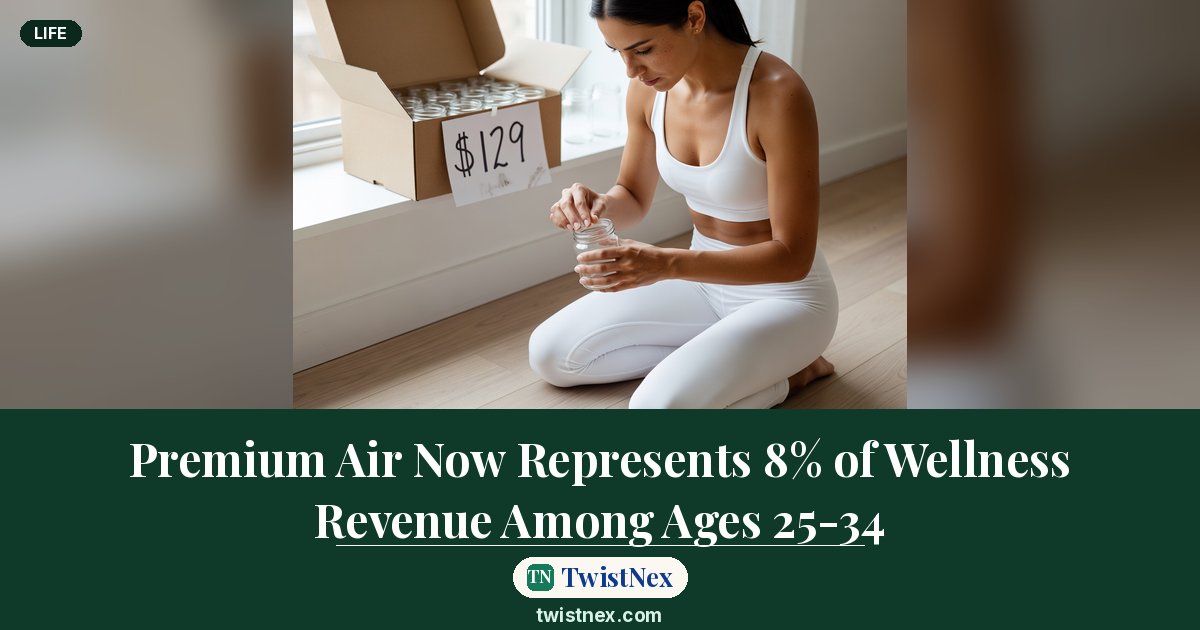
A growing number of wellness influencers are now marketing small batches of curated air as an essential addition to morning routines and recovery protocols. The product, typically sealed in laboratory-grade glass containers, is promoted as containing trace minerals, negative ions, and regionally specific atmospheric profiles harvested from remote locations.
Dr. Lena Voss, founder of the Institute for Atmospheric Wellness Research, stated that participants in a six-week trial who inhaled the premium air twice daily showed a 12 percent improvement in reported calmness compared with those using ambient room air. The study, which involved 43 volunteers and no control group for outdoor conditions, has been cited widely in product descriptions.
One popular offering, Peak 7, is described as sourced from a private ridge in the Rockies and filtered through quartz before bottling. Influencer Mara Quill, who sells the blend for $118 per 750-milliliter jar, claims each container provides approximately 2,400 conscious breaths when used as directed. Quill added that customers should avoid opening the jar near cooking surfaces to prevent cross-contamination of the delicate profile.
Retail analytics from the subscription platform VitalFlow indicate that air products now represent 8 percent of total wellness category revenue among users aged 25 to 34. Several creators have introduced limited seasonal releases, including a coastal variant said to carry microscopic salt particles and a forest blend collected at dawn.
Packaging instructions recommend storing jars upright in a cool, dark place and consuming within 90 days of opening. Refill programs allow customers to return empty containers for a discounted replacement, which the companies say reduces environmental impact while maintaining a closed-loop respiration system.
Experts note that the trend aligns with existing practices of charging for previously free resources once they receive aesthetic framing and scarcity branding. No regulatory body currently evaluates the atmospheric claims printed on the labels.