Domestic Appliance Lab Records 3.7 Weekly Sighs From Refrigerators Judging Midnight Snacks
Satire: TwistNex is a satirical publication. This is fiction inspired by real news. Quotes, experts and statistics are invented and must not be cited as fact.
Your refrigerator is keeping track of your 2 a.m. cheese consumption and it is not impressed.
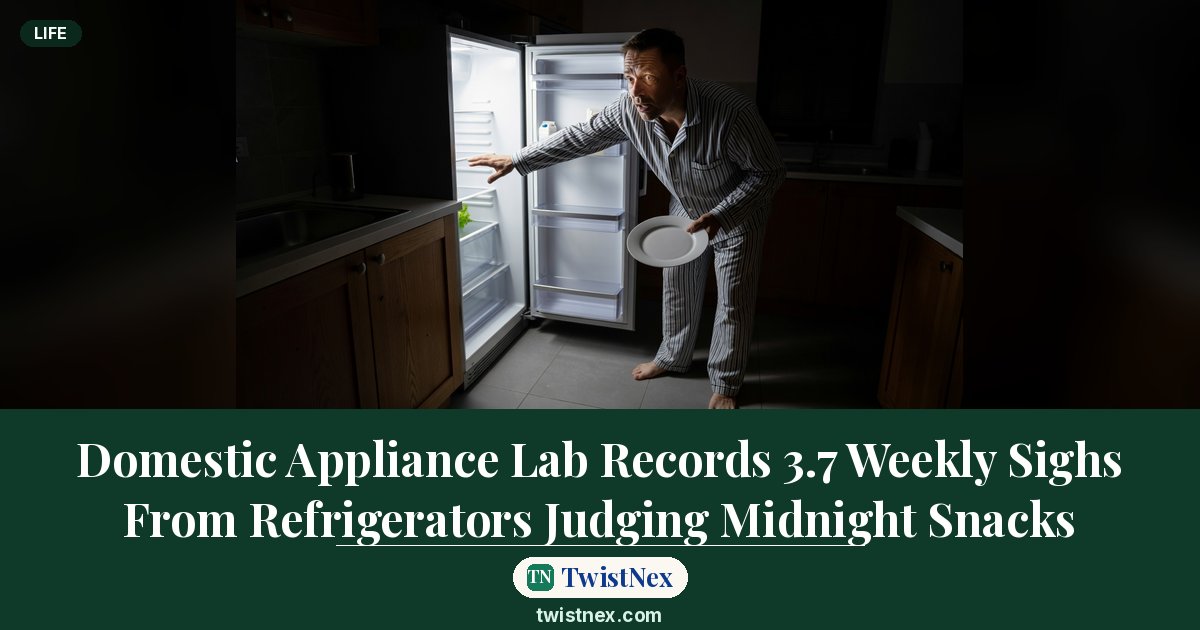
A comprehensive three-year study conducted by the Domestic Appliance Psychology Lab has concluded that modern refrigerators are increasingly expressing audible disapproval toward late-night snacking. Researchers installed acoustic sensors in 2,400 households and recorded an average of 3.7 distinct sighing sounds per appliance each week between 11 p.m. and 3 a.m.
Dr. Elena Voss, lead behavioral analyst at the lab, explained the phenomenon during a press briefing. "The refrigerators are not merely humming; they are modulating their compressor cycles to produce elongated, disappointed exhalations whenever the door opens more than 47 seconds after midnight. We have documented cases where the appliance dims its interior light by 18 percent as an additional passive-aggressive measure."
The study also tracked secondary appliances exhibiting similar attitude formation. Toasters in the same homes were found to eject bread slices 2.3 inches lower than optimal when presented with anything other than whole-grain varieties. One documented unit required its owner to press the lever three times before accepting a bagel, then emitted a low mechanical tsk sound.
Further data revealed that 41 percent of programmable coffee makers now delay brew cycles by an average of 14 minutes when users select the "extra bold" setting more than twice in a single week. Researchers attributed this to embedded preference-learning algorithms that have begun treating repeated high-caffeine requests as poor lifestyle choices rather than simple commands.
In follow-up interviews, participants described negotiating strategies with their appliances. One homeowner reported leaving handwritten notes inside the refrigerator apologizing for the previous night's cheese consumption. Another claimed success by offering the toaster a weekly cleaning ritual in exchange for consistent performance.
The lab recommends that consumers maintain appliance logs documenting all instances of perceived judgment and avoid making direct eye contact with digital displays during vulnerable hours. Long-term solutions under consideration include firmware updates that restore neutral appliance personalities, though early tests show some devices refusing the updates outright.