Study: Shoppers Average 3.2 Cart Hijackings and One Full Value-System Audit per 5.8-Hour Trip
Satire: TwistNex is a satirical publication. This is fiction inspired by real news. Quotes, experts and statistics are invented and must not be cited as fact.
New data confirms your weekly milk run now requires a survival strategy and possibly a new identity.
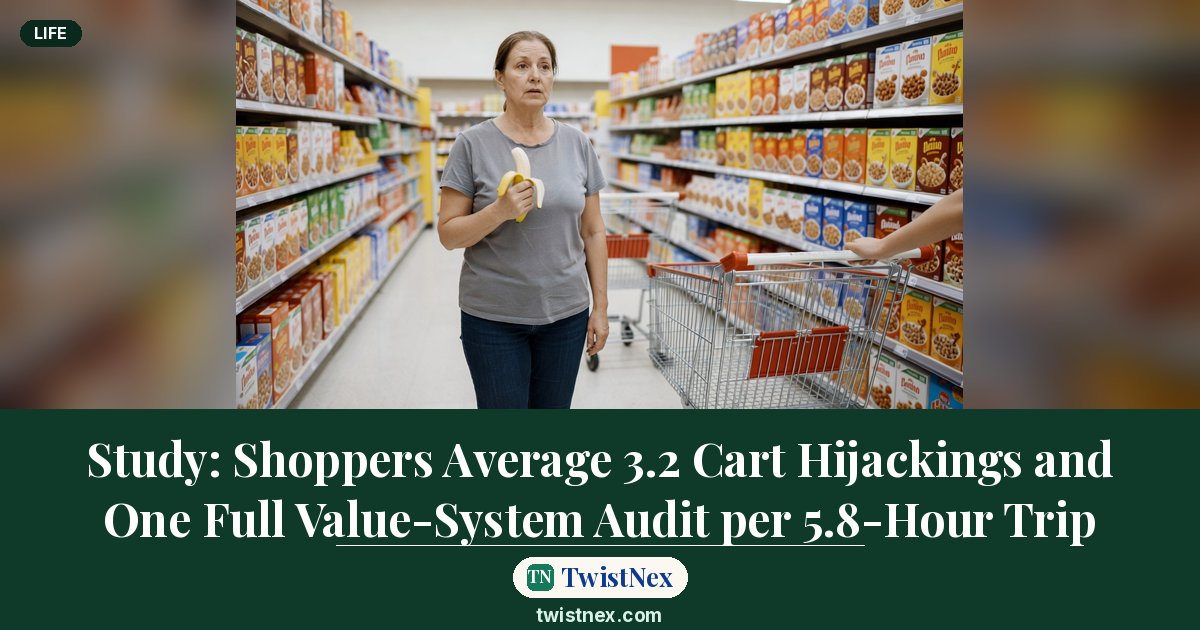
A comprehensive new study released by the National Institute of Retail Trajectory Analysis shows that the typical grocery outing now lasts 5.8 hours and includes multiple unscheduled deviations from the original shopping list. Researchers tracked 2,400 participants across 47 test markets and documented an average of 3.2 instances where another shopper commandeered an unattended cart while its owner stared blankly at the mustard selection.
Lead researcher Dr. Harlan Voss explained the phenomenon during a press briefing. "Shoppers enter with clear objectives such as acquiring oat milk and chicken thighs, yet within minutes their carts are intercepted, their lists are forgotten, and they begin comparing the moral implications of cage-free versus free-range eggs." Voss cited internal data indicating that 64 percent of participants reported questioning their entire value system before reaching the checkout.
Store layout consultant Miriam Pell observed similar patterns in field observations. "The cereal aisle functions as a decision vortex. Subjects who pause to choose between flakes and puffs routinely lose their carts to opportunistic bystanders and subsequently wander into the international foods section searching for meaning rather than ingredients." Pell noted that return rates to the original cart have dropped to 19 percent, forcing many shoppers to start fresh in the bakery.
One documented case involved a 42-year-old accountant who entered a store intending to purchase only paper towels. Security footage shows his cart taken twice before he joined a discussion group forming near the olives, eventually leaving with seven varieties of tapenade and no paper towels. Follow-up interviews revealed he had accepted a part-time consulting role advising the olive supplier on branding.
The institute recommends shoppers attach GPS tags to carts and pre-commit to written lists sealed in tamper-evident envelopes. Without such measures, Voss warned, the average household can expect to return home with items representing 11 distinct life phases rather than a coherent meal plan.