Canada Vows Retaliation of Longer Meetings and Slightly Frostier Handshakes
Satire: TwistNex is a satirical publication. This is fiction inspired by real news. Quotes, experts and statistics are invented and must not be cited as fact.
Trump just made importing Canadian lumber more expensive than therapy for two countries that used to get along fine.
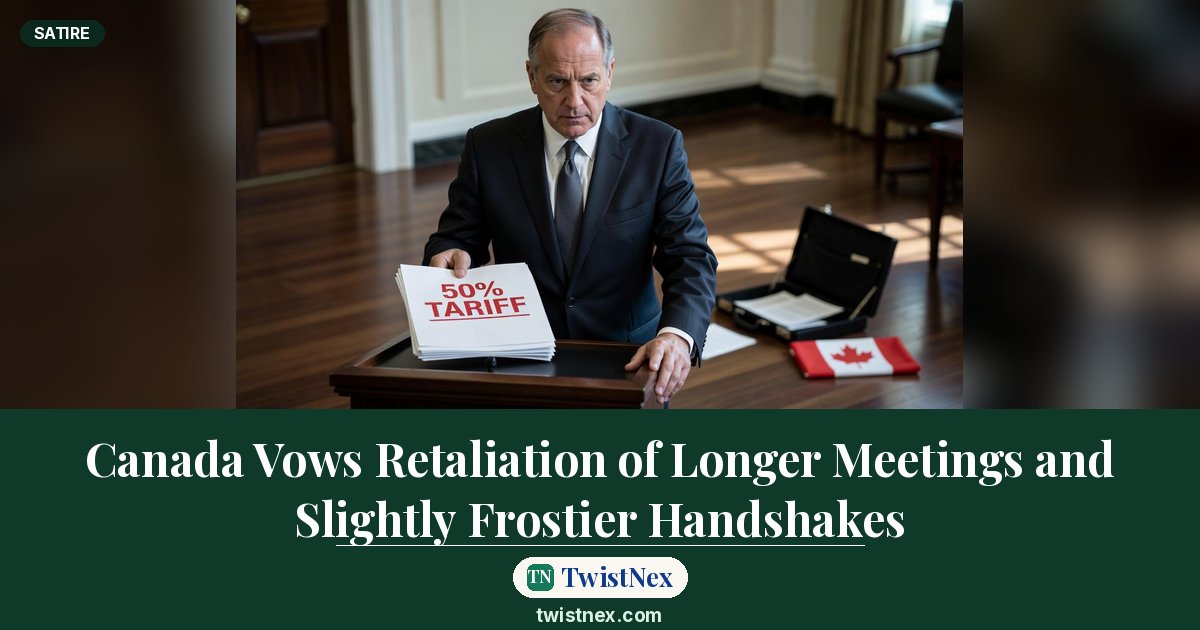
The White House announced 50 percent tariffs on Canadian lumber, dairy, and auto parts after bilateral talks collapsed, instantly turning the world's most boring border into a trade battleground. Officials described the move as routine economic leverage, the kind that leaves everyone slightly poorer but no one technically at war.
Economists noted the tariffs are unlikely to sink Canada's overall economy, which they called a polite way of saying the damage will mostly hit regular households rather than government balance sheets. One senior advisor, speaking on condition of anonymity, explained that American consumers would simply pay more for plywood and cheese while feeling morally superior about it.
Canadian officials responded by promising to review every existing trade preference, a threat that in practice means longer meetings and slightly frostier handshakes. Inside the administration, aides floated the idea that the tariffs would force domestic production of items Canada currently supplies, such as affordable electricity and seasonal workers who do not complain about the weather.
A source close to the negotiation described the final session as tense yet productive, with both sides agreeing to schedule another round of tariffs in six months. Industry analysts projected that the policy would create jobs in tariff-enforcement offices and complaint-hotline call centers, two sectors long overlooked by conventional stimulus.
The White House insisted the measures were temporary until Canada addressed unspecified imbalances, a standard that has previously justified tariffs on steel, washing machines, and solar panels. Observers expect the next phase to include a 35 percent surcharge on politeness itself, once officials figure out how to measure it at the border.