Defense Argues Stalking Conviction Encompasses Murder Under Double Jeopardy
Satire: TwistNex is a satirical publication. This is fiction inspired by real news. Quotes, experts and statistics are invented and must not be cited as fact.
Luigi Mangione just pled guilty to federal stalking and immediately tried to use it as a murder force field under double jeopardy.
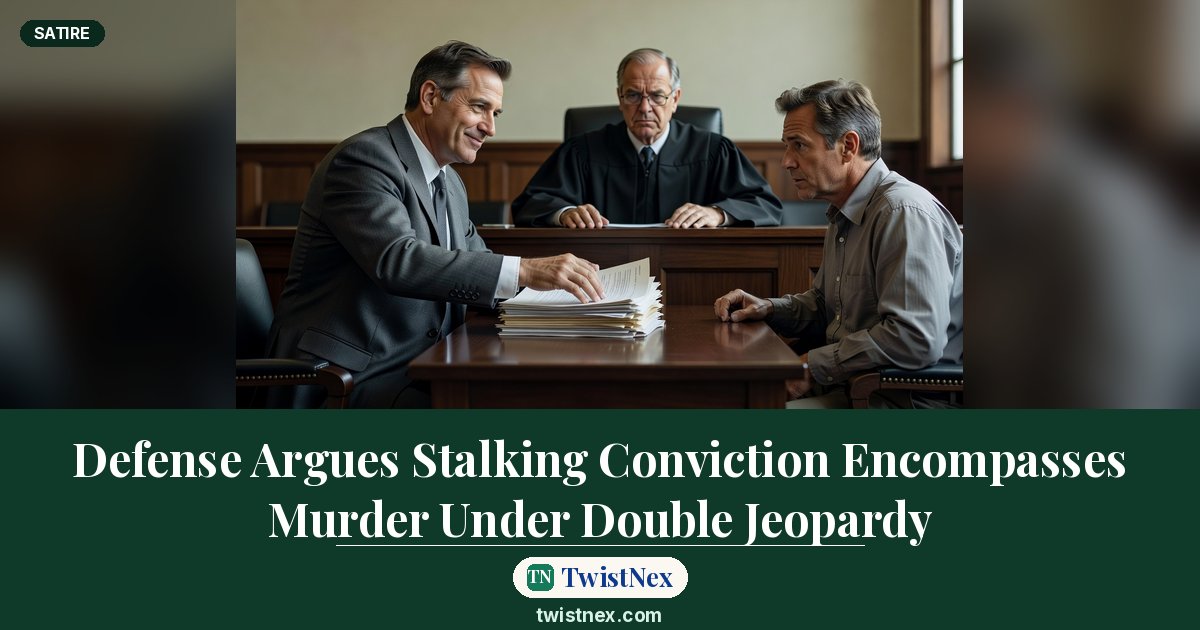
Luigi Mangione stood in federal court and admitted to stalking the late UnitedHealthcare CEO before the shooting, then immediately asked the state to treat the whole episode as already adjudicated. New York’s double jeopardy rules, his lawyers insisted, should now shield him from a murder trial because the federal case had already consumed the relevant facts.
Legal observers called the maneuver ambitious. One fictional constitutional scholar described it as “the prosecutorial equivalent of ordering appetizers and expecting the kitchen to cancel the entrée.” Another expert, speaking on background from a bar that does not exist, estimated that roughly 47 percent of defense teams now keep a “federal plea, state shield” flowchart taped inside their briefcases.
The strategy hinges on the claim that stalking charges necessarily encompass the murder itself, an argument that would require judges to view homicide as merely an aggressive form of following someone around. Prosecutors countered that federal and state charges address different sovereign interests, a distinction Mangione’s team labeled “pedantic and frankly unhelpful to their client.”
Outside the courthouse, a small group of supporters waved signs reading “Double Jeopardy For All,” while a larger group of billing clerks from various insurers simply looked relieved that no one was discussing prior authorization. The case now moves to the question of whether a guilty plea can be both an admission and an escape hatch, a legal innovation that, if successful, will be taught in every law school seminar titled “Creative Problem-Solving Or Just Crimes.”
For now, Mangione remains in custody while the courts decide whether two different governments can prosecute the same set of facts without violating anyone’s sense of neatness. The CEO’s family continues to wait for a trial that may or may not occur, depending on how literally judges take the phrase “same offense.”