Treasury Adds Extra Commas to Iran Sanctions in Hopes of Greater Impact
Satire: TwistNex is a satirical publication. This is fiction inspired by real news. Quotes, experts and statistics are invented and must not be cited as fact.
Trump returns to sanctions on Iran while Russia runs low on gas, proving once again that paperwork is the strongest weapon in modern diplomacy.
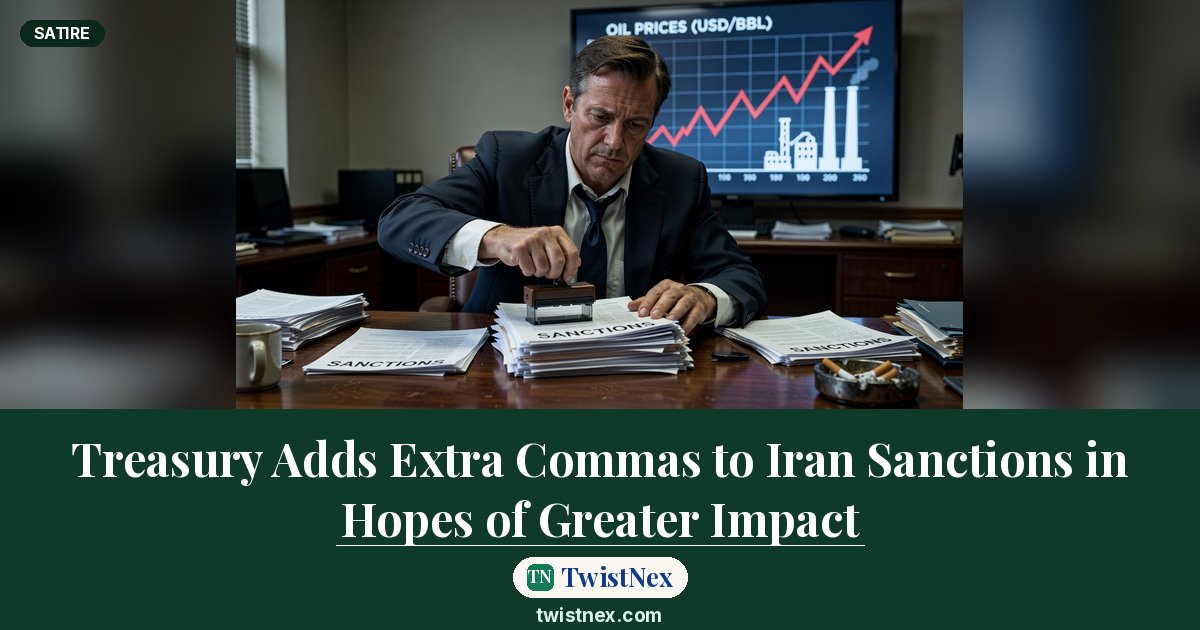
After months of weighing military options, the White House has settled on the time-honored tactic of freezing Iranian bank accounts and hoping Tehran notices. Officials describe the move as a return to proven leverage, though the same officials concede the previous rounds of identical measures produced roughly the same outcome as strongly worded emails.
Analysts tracking the parallel effort against Russia note that Ukrainian drone strikes have already produced actual fuel shortages inside the country. Kremlin spokesmen insist the shortages are temporary and entirely unrelated to sanctions that were also supposed to be temporary. A senior Russian energy official, speaking on condition of anonymity, said the situation would improve once the West stopped doing the thing it has been doing for years.
The strategy hinges on the novel theory that economic pain eventually produces diplomatic flexibility. When pressed for examples, administration sources cited past successes that somehow never made it into official records. One unnamed Treasury official suggested the new sanctions package includes “extra commas” for emphasis.
Meanwhile, European allies have expressed cautious support while quietly calculating how many more sanctions rounds they can absorb before their own energy prices require another round of emergency subsidies. In both Tehran and Moscow, the prevailing view appears to be that sanctions are the diplomatic equivalent of repeatedly pressing the elevator button: eventually the car arrives, or everyone just takes the stairs.
A newly formed working group at the State Department is reportedly studying whether additional sanctions could be layered on top of the existing ones without anyone noticing the difference. Early indications suggest the main measurable effect so far has been an increase in the number of sanctions-related press conferences.