EU Freezes Wildfire Funds Until Officials Complete Three Studies Confirming Fire Is Hot
Satire: TwistNex is a satirical publication. This is fiction inspired by real news. Quotes, experts and statistics are invented and must not be cited as fact.
Europe's wildfire plan is basically hoping the flames will attend the next climate summit and behave
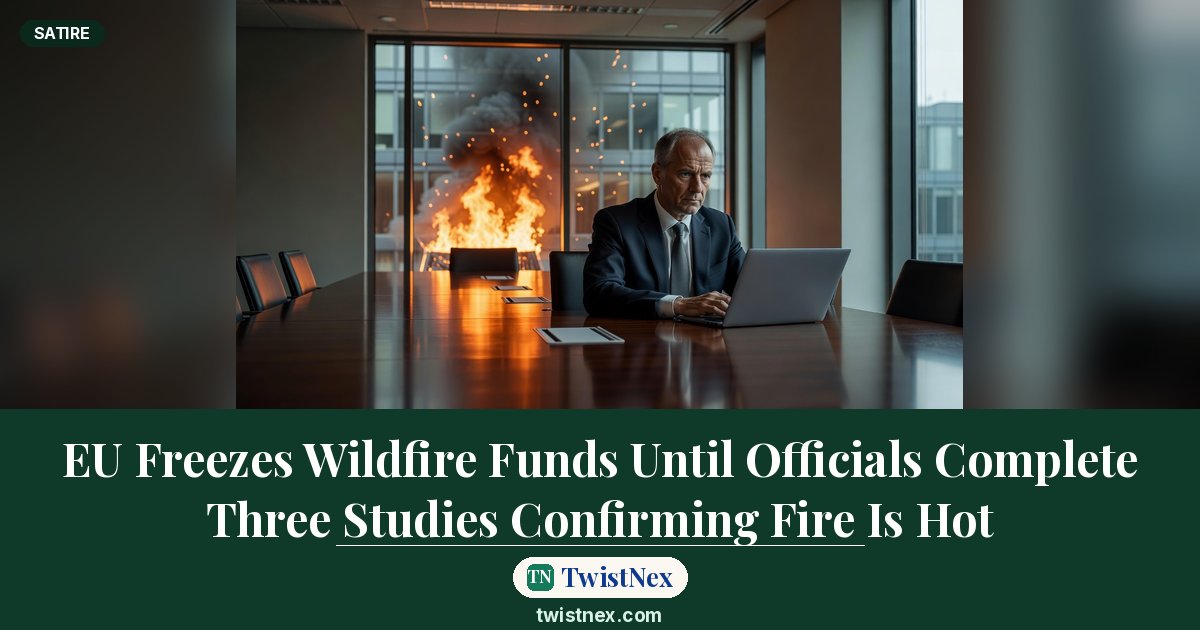
European officials have unveiled their latest wildfire strategy: scheduling urgent video calls while Spain and France continue to burn. The plan, described by insiders as "robust," involves heatwave experts agreeing that dry spells are indeed dry and that fire moves when it is windy.
In Madrid, firefighters watched a new EU directive arrive by email just as another blaze jumped a containment line. The document recommended "enhanced stakeholder dialogue" and "leveraging synergies," phrases that have so far failed to extinguish anything except enthusiasm. A French prefect told reporters the situation was "under continuous assessment," which translates to "we are watching it on a screen from a cool room."
Satellite maps released this week show the scale of the problem with impressive red shading, yet the accompanying press release focused on how many hashtags the maps had generated. One unnamed commission source suggested that if temperatures kept rising, the bloc might consider "further consultations" in September. By then, several villages are expected to have held their own consultations with the flames.
Billion-euro adaptation funds, meanwhile, remain largely unspent because the approval process requires three separate climate-impact studies and a unanimous vote that no one can schedule before the next heat dome arrives. When asked whether the fires themselves counted as sufficient evidence, an official replied that more peer-reviewed modeling would be prudent.
The continent's most advanced response so far has been to issue apps that notify citizens when it is advisable to evacuate. Early testers report the notifications arrive approximately twelve hours after the smoke has already made the decision for them. Officials insist the system is working as designed, provided the design goal was never actually stopping the fires.