Wildfire Rejects All Offers, Insists on Total Occupancy of Cap Ferret
Satire: TwistNex is a satirical publication. This is fiction inspired by real news. Quotes, experts and statistics are invented and must not be cited as fact.
France and Utah are both moving thousands of residents because the wildfires booked the entire summer season without notice.
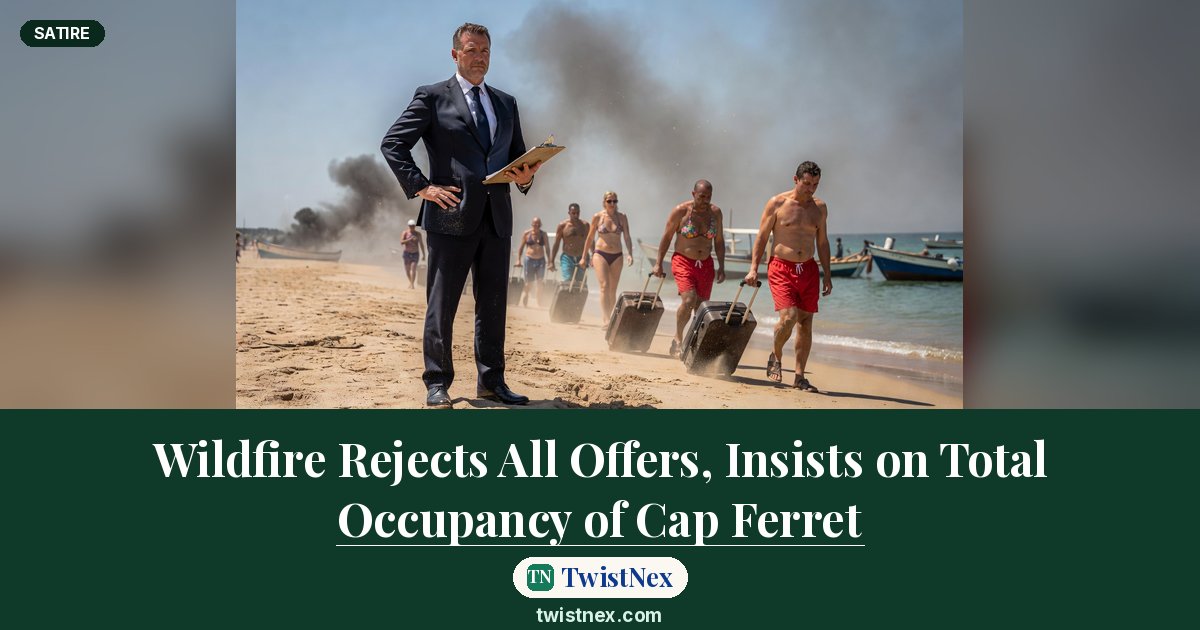
French authorities have ordered the full evacuation of Cap Ferret, citing an intense wildfire that apparently failed to check the local tourism calendar. More than 40,000 people are now fleeing by road and boat while officials describe the blaze as “highly unpredictable,” a phrase usually reserved for election results.
Utah officials followed suit, evacuating the town of Eureka ahead of the Iron fire, which has already scorched over 2,000 acres. Forecasters predict continued extreme heat, confirming that summer in the American West now comes with its own evacuation app.
A spokesperson for the French Interior Ministry, speaking from a hastily relocated press tent, explained that the wildfire had rejected all compromise offers including controlled burns and polite letters. “We tried negotiating,” the official said, “but it kept insisting on total occupancy.”
Meteorologists at the hastily assembled Institute for Things We Already Predicted released a statement noting that record temperatures were “within expected parameters for a planet that treats emission cuts like optional side dishes.” One analyst added that next year’s models include mandatory lifeboat drills for coastal resorts.
Local hoteliers expressed disappointment that the evacuation order arrived after most guests had already paid deposits. One owner suggested the government should have issued “wildfire warnings” instead of “heat advisories” so visitors could have packed lighter. Meanwhile, Utah ranchers reported that their cattle had begun self-evacuating days earlier, apparently better at reading wind patterns than several state agencies.
Both regions now face the logistical challenge of moving thousands of people while the same weather systems responsible for the fires continue operating without permits. Experts predict further surprises unless governments begin treating climate reports as binding rather than inspirational wall art.