World Cup Found To Treat Anxiety By Replacing It With Fear Of Group Stage Elimination
Satire: TwistNex is a satirical publication. This is fiction inspired by real news. Quotes, experts and statistics are invented and must not be cited as fact.
New research claims the World Cup heals minds—by swapping real problems for the emotional damage of watching Germany wait 12 years to qualify.
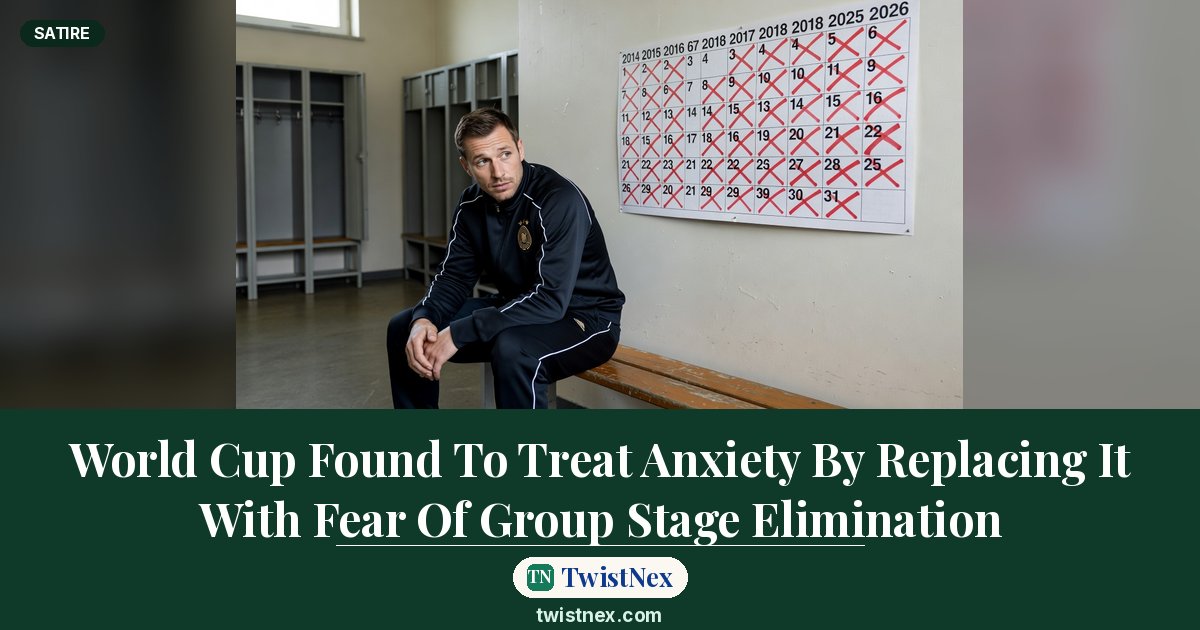
Mental health experts have declared the World Cup a powerful therapeutic tool, provided patients replace their actual problems with the far more manageable stress of group-stage exits and penalty shootouts.
The breakthrough comes as Germany defender Jonathan Tah prepares for his first World Cup at age 30, a wait so long that several of his childhood anxieties have already aged into full midlife crises. Researchers note that Tah’s prolonged anticipation has functioned as an involuntary exposure therapy, teaching him that disappointment arrives on schedule whether or not he packs his boots.
“Watching elite athletes chase a ball is clinically proven to lower cortisol levels,” explained one fictional psychologist whose grant depends on FIFA hospitality. “The key is ignoring the part where the same athletes later require their own therapy after missing open goals.”
Officials say the mental-health dividend scales with national investment. Countries that spend billions on stadiums report citizens feel temporarily united in shared delusion, a bonding experience unavailable from cheaper hobbies like breathing or touching grass. Those who cannot afford tickets are advised to enjoy the secondary benefit of arguing about referee decisions on social media until their thumbs develop repetitive-strain injuries.
Tah, asked how the long wait affected his well-being, reportedly answered that he now treats every training session as both dress rehearsal and farewell tour. Teammates confirmed he keeps a laminated copy of the 2014 squad list in his locker as a cautionary talisman.
The study concludes that the World Cup’s greatest psychiatric contribution is perspective: after 90 minutes of extra time and VAR reviews, most personal problems suddenly seem refreshingly solvable. Patients are therefore encouraged to schedule their next breakdown for after the final whistle.