Charities Train Staff To Call Stabbings 'Neurodivergent Boundary Challenges'
Satire: TwistNex is a satirical publication. This is fiction inspired by real news. Quotes, experts and statistics are invented and must not be cited as fact.
Mind finally admits its biggest fear wasn’t violence, it was bad optics.
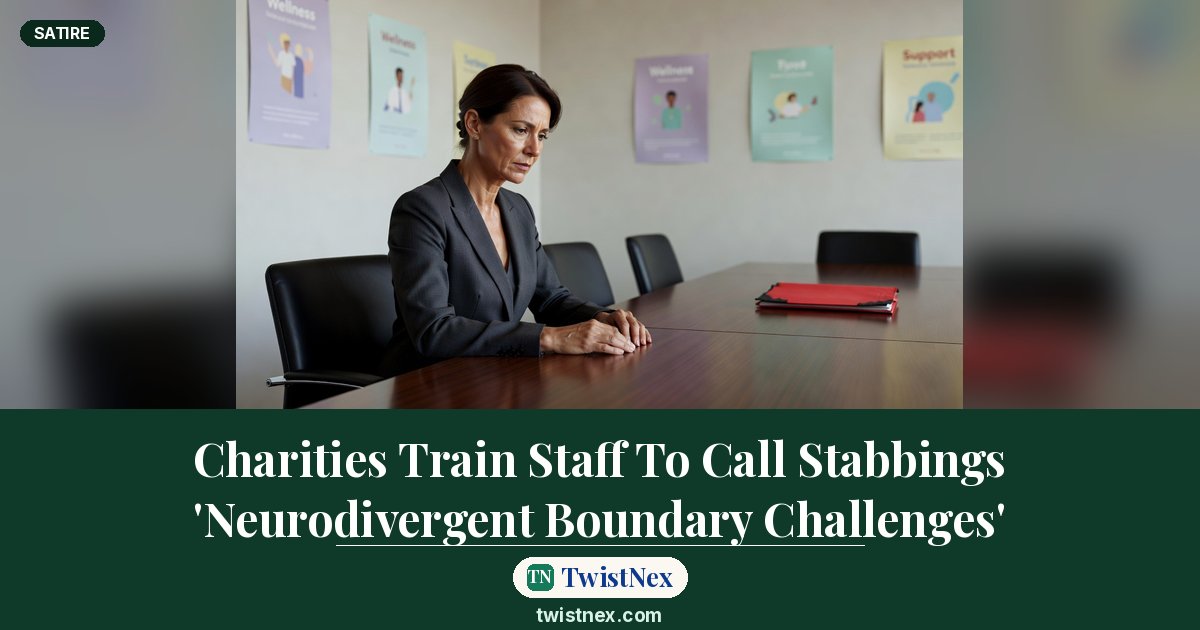
The head of Mind has confirmed what everyone already suspected: mental health charities have spent years dodging any discussion of violence linked to severe illness because it might complicate their fundraising slide decks.
Dr Sarah Hughes told reporters that organisations avoided the topic out of fear it would reinforce stigma. The admission arrives just as the inquiry into the Nottingham attacks prepares to close, proving that even when real incidents force the conversation, the sector’s first instinct remains reputation management.
Sector insiders describe quiet internal guidance advising staff to redirect questions about violence toward “lived experience narratives” and pastel infographics. One former communications director, speaking on condition of anonymity, said the preferred response to any stabbing was always “more funding for therapy dogs.”
A hastily commissioned internal report now recommends that future incidents be addressed through “contextual storytelling workshops” rather than risk assessments. Early drafts suggest staff will be trained to respond to media inquiries with the phrase “we’re all on a journey” while slowly backing toward the exit.
Advocacy groups have already begun rebranding the issue as “occasional boundary challenges from neurodivergent individuals experiencing acute dysregulation episodes.” Focus groups reportedly preferred this wording over any sentence containing the word “danger.”
The Nottingham inquiry’s final report is expected to note that several agencies received warnings yet prioritised narrative consistency over practical safeguards. Charities have responded by announcing a new awareness month titled “See Something, Say Something Gentle.”
Hughes stopped short of proposing concrete changes, instead calling for “a more compassionate evidence base.” Observers interpreted this as further evidence that the sector’s primary risk metric remains how the charity’s own Instagram feed will look.