Pentagon Ranks Army Secretary Finalists by PowerPoint Tolerance and Nodding Ability
Satire: TwistNex is a satirical publication. This is fiction inspired by real news. Quotes, experts and statistics are invented and must not be cited as fact.
Hegseth's Army secretary favorite just learned the role has three other applicants and zero clear criteria. Meritocracy is apparently in the mail.
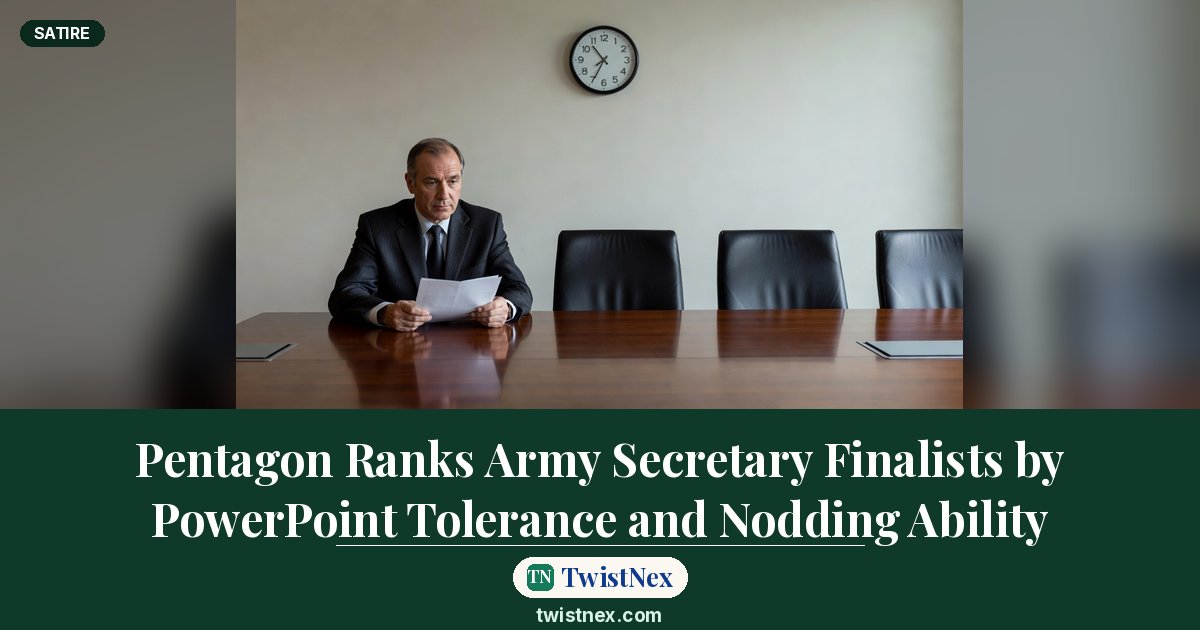
Defense Secretary Pete Hegseth's preferred candidate for Army secretary has discovered the position is apparently open to anyone with a pulse and a security clearance. Sean Parnell now competes against at least three other contenders, including current Pentagon officials, in what insiders describe as a rigorous process best summarized as "whoever survives the group chat."
The field includes Marc Anderson and two additional candidates whose résumés reportedly feature the same bullet points rearranged in different fonts. Sources close to the selection committee say the decisive factor will be demonstrated ability to nod solemnly during briefings while avoiding any sudden policy ideas.
One senior official, speaking on condition of anonymity because the entire process already feels like a leaked memo, claimed the finalists were evaluated on a 10-point scale that included loyalty, availability, and tolerance for PowerPoint presentations exceeding 400 slides. "We're looking for someone who can handle the Army without accidentally starting a new one," the official added.
Outside experts have begun speculating that the expanded candidate pool reflects a bold new strategy of treating cabinet-level appointments like fantasy football drafts. "Four people for one job suggests either deep talent or total confusion about what the job entails," noted a retired general who now consults for think tanks that mostly produce podcasts.
Parnell's supporters maintain he remains the frontrunner due to his existing role as Pentagon spokesman, giving him the unique advantage of already knowing where the bathrooms are. Rival camps counter that their candidates bring fresh perspectives, such as different coffee preferences and slightly varied opinions on whether the Army needs more tanks.
The selection is expected to conclude once all four finalists have been asked the same three questions and the winner is chosen by whoever makes the least eye contact with reporters. Until then, the Pentagon continues operating under the assumption that someone, eventually, will take the job.