NHS Alzheimer's Trial Includes App Reminding Participants They Agreed to Participate
Satire: TwistNex is a satirical publication. This is fiction inspired by real news. Quotes, experts and statistics are invented and must not be cited as fact.
NHS now testing Alzheimer's drugs on people whose brains still function. Next: sunscreen for people who haven't gone outside yet.
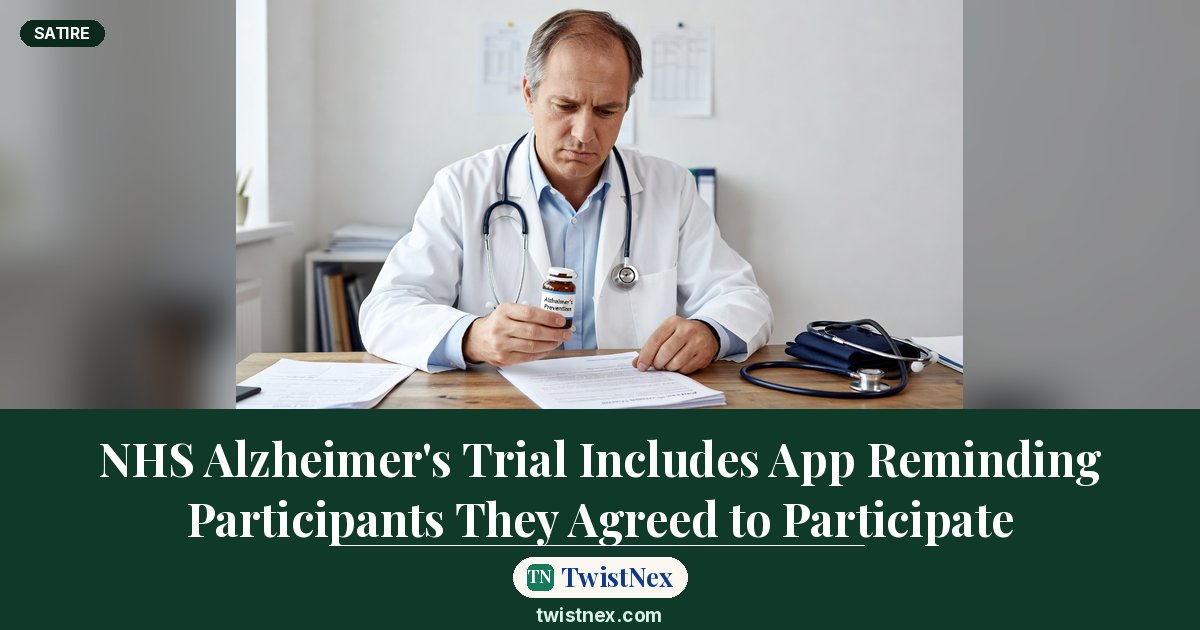
Healthy middle-aged volunteers are being recruited for a new trial that hands out an unproven Alzheimer's drug to anyone whose brain still works well enough to sign the consent form.
The study, run by an NHS trust, targets people at elevated genetic risk but with zero symptoms. Participants will receive the medication for years in hopes it stops dementia from ever appearing. Organizers describe it as proactive medicine. Critics describe it as turning ordinary adults into lab rats with decent short-term memory.
One trial coordinator insisted the approach makes perfect sense. "If we wait until people lose their keys, we've already lost the plot," she said. "We're simply treating the disease before the disease treats the patient."
Pharmaceutical partners have already projected robust future sales once the drug is positioned as a daily supplement for anyone over forty who occasionally misplaces their phone. Internal forecasts reportedly include a line item for "regret-based repeat prescriptions" among those who later wonder why they joined.
Participants will undergo regular scans and cognitive tests to measure whether the drug preserves brain function better than doing nothing. Early data is expected in five years, assuming the volunteers can still recall they are in a study. Researchers have prepared reminder apps, though several team members privately worry the apps themselves may one day need clinical trials.
Public health officials framed the effort as forward-thinking prevention rather than expensive overreach. One government adviser noted that catching Alzheimer's early is cheaper than managing it late, provided the early intervention does not create new problems that also require management. The trial's ethics board declined to comment, citing an inability to locate its own meeting notes from last month.