Trump Calls Mistrial 'A Shame' While Signing Orders Expected to Generate More
Satire: TwistNex is a satirical publication. This is fiction inspired by real news. Quotes, experts and statistics are invented and must not be cited as fact.
Trump weighs in on the Clancy mistrial the same way he weighs in on everything else: briefly, during a signing ceremony for something else entirely.
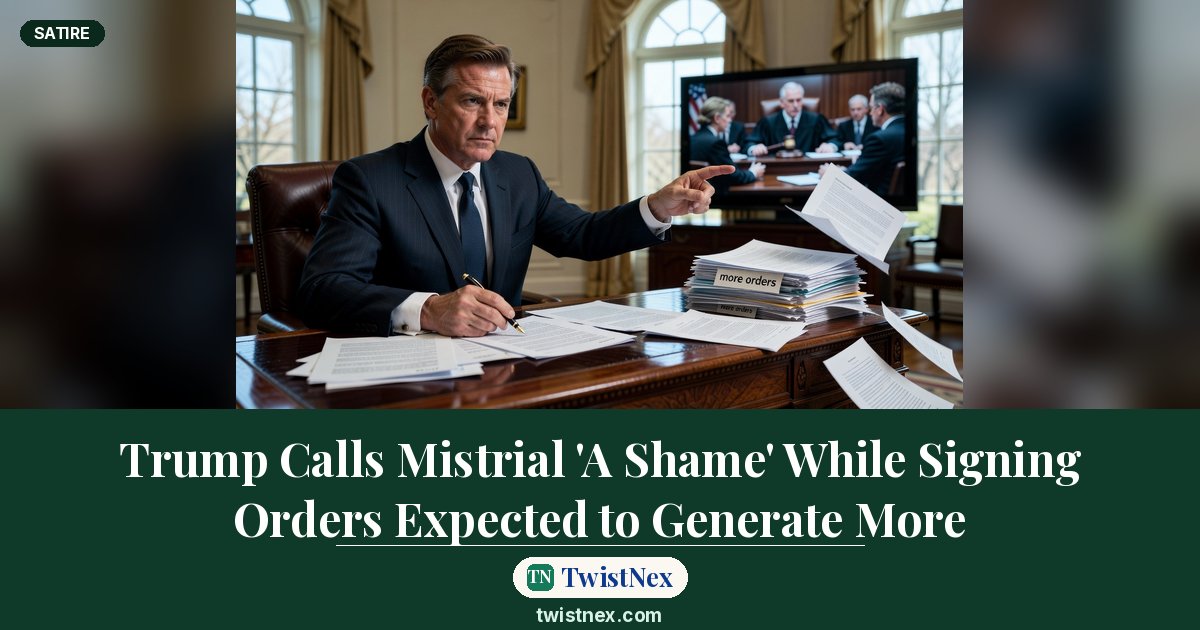
President Trump delivered his first public thoughts on the Lindsay Clancy mistrial Friday, describing the outcome as "a shame" and "a horrible tragedy" during a ceremony for new executive orders. The remarks came as the judge halted proceedings after jurors deadlocked, leaving prosecutors to decide whether to retry the case.
White House aides immediately framed the president's comments as a model of restraint. "He stuck strictly to the facts he could remember from the briefing," one official said. Officials declined to elaborate on which facts those were.
The president used the moment to highlight his administration's broader approach to the justice system. "We have to be careful with these things," he told reporters. "Otherwise you end up with mistrials everywhere, and then nobody gets anything done. Look at all these orders I'm signing right now. Very productive."
Legal observers noted the unusual venue for the comments. Trump made them while seated at a desk stacked with documents, pausing only to ask an aide whether the mistrial would affect his new rule requiring federal agencies to report directly to him. No one answered.
Satirists online quickly compared the statement to past presidential interventions in high-profile cases, though administration officials insisted this one was different because it contained no nicknames. "It's progress," one former prosecutor joked. "At least he didn't demand the judge be impeached on the spot."
The Clancy case remains unresolved, with families on both sides awaiting prosecutors' next move. The White House, meanwhile, moved on to the next executive order, which sources say addresses "wasteful trials" by giving the president final say over whether any federal case proceeds. No word yet on whether that order applies retroactively.