Florida Sheriffs Remove License Cameras After System Records Their Own Vehicles
Satire: TwistNex is a satirical publication. This is fiction inspired by real news. Quotes, experts and statistics are invented and must not be cited as fact.
Red-state sheriffs just discovered license-plate cameras also photograph their own cars and immediately declared privacy a core value.
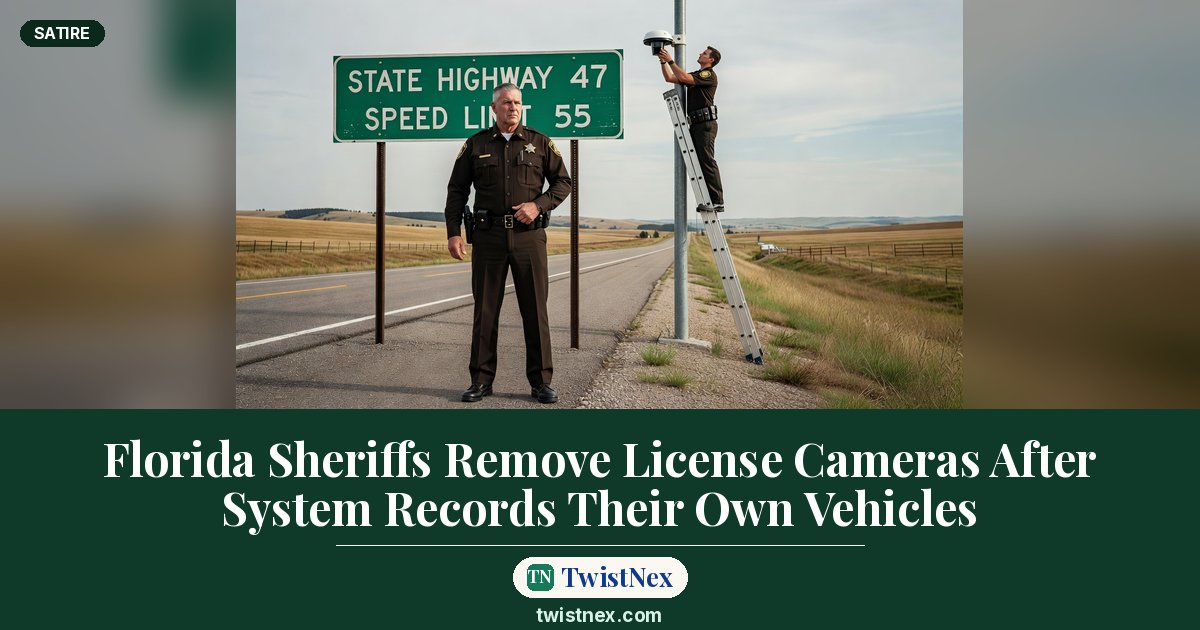
Florida transportation officials have ordered the removal of Flock license-plate readers from state highways after local law enforcement discovered the devices record every vehicle, including their own. The move follows months of complaints that the cameras were capturing plates without sufficient oversight, a problem that apparently became urgent only after the technology began documenting routine drives by officers and elected officials.
County agencies in Collier and elsewhere quickly complied, citing privacy concerns that had not surfaced during earlier deployments aimed at locating stolen cars or wanted suspects. One sheriff’s department spokesman described the cameras as “overreach” after internal logs showed repeated hits on personal vehicles traveling between home and secondary addresses. A state legislator who previously championed expanded surveillance told reporters the system had become “too effective for comfort.”
Industry analysts note that competing camera companies are already marketing versions with stricter access controls that exclude oversight boards and journalists. “Our new model only flags plates belonging to other people,” one vendor brochure reportedly states. Civil-liberties groups, long ignored when raising similar objections, have been invited to the new rollout meetings as decorative witnesses.
The policy shift has prompted other red states to review their own contracts. A Texas county commissioner warned that continued use risked “accidental documentation of campaign donors leaving certain establishments after midnight.” Lawmakers are now drafting carve-outs that would preserve the cameras for everyone except government plates, emergency vehicles, and any motorist whose spouse sits on the county commission.
Early tests of the revised systems show dramatically fewer alerts once patrol cars and unmarked units are filtered from the database. Officials insist the change restores public trust while still allowing enforcement against people who do not write the rules.