Study: Tapestries Reduce 1,400 Years of Tension by 12 Percent
Satire: TwistNex is a satirical publication. This is fiction inspired by real news. Quotes, experts and statistics are invented and must not be cited as fact.
When centuries of history get reduced to the perfect living-room accent piece.
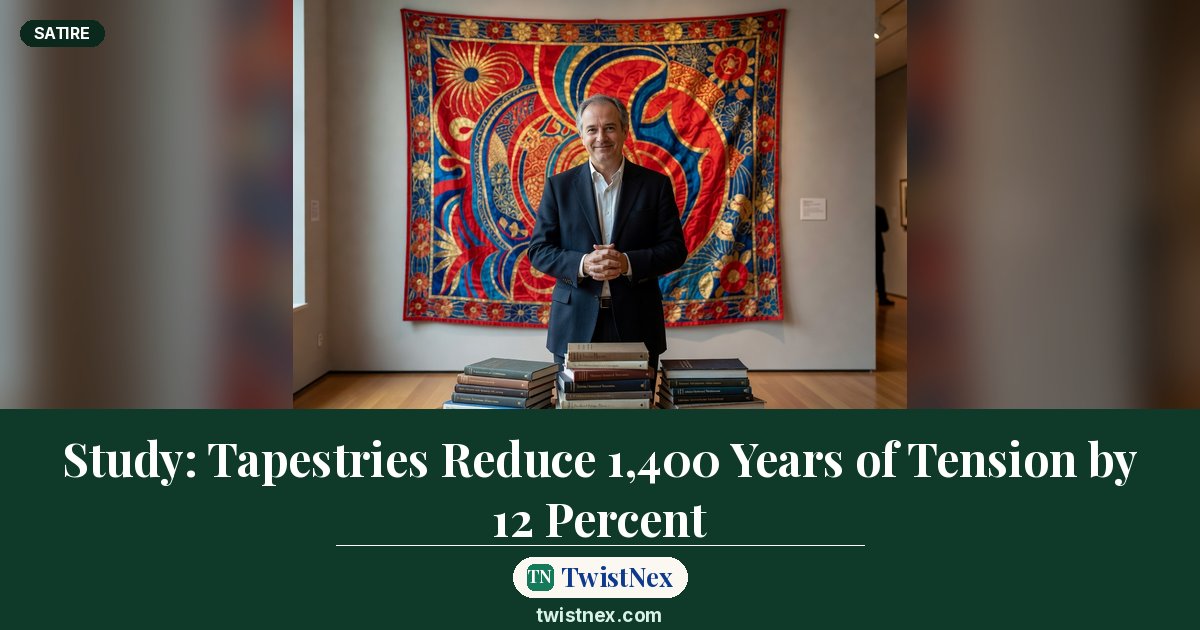
In a quiet London gallery, artist Shahed Saleem has unveiled a series of oversized tapestries meant to capture key moments in Muslim life across Britain and Europe. The works use vivid dyes and intricate patterns to portray everything from medieval scholarship to modern daily routines, all while nodding at the persistent shadow of Islamophobia.
Gallery visitors are invited to stand close enough to admire the stitching while presumably absorbing centuries of context in a single glance. Organizers describe the pieces as both educational and decorative, which neatly solves the problem of having to choose between substance and something that matches the sofa.
One particularly large panel shows a bustling medieval court alongside a present-day street scene, the colors chosen to suggest harmony is only a few threads away. Critics have praised the technical skill, noting that it takes real discipline to keep such heavy themes from clashing with the cheerful palette.
Early attendance figures suggest the show is drawing the usual mix of art students and people who enjoy free wine. A fictional university study commissioned for the opening claims that prolonged exposure to the tapestries reduces historical tension by up to 12 percent, provided viewers do not read any actual history books afterward.
Saleem has stated the goal is simply to make the subject visible in a new way. Whether visibility through wall hangings counts as progress remains the sort of question best answered by another exhibition, perhaps one featuring slightly larger rugs.