ICE Attributes 400% Rise in Unauthorized Optimism to Contact Visits
Satire: TwistNex is a satirical publication. This is fiction inspired by real news. Quotes, experts and statistics are invented and must not be cited as fact.
ICE now treats hugs like contraband in California's biggest detention center, because nothing threatens border security like a mother's embrace.
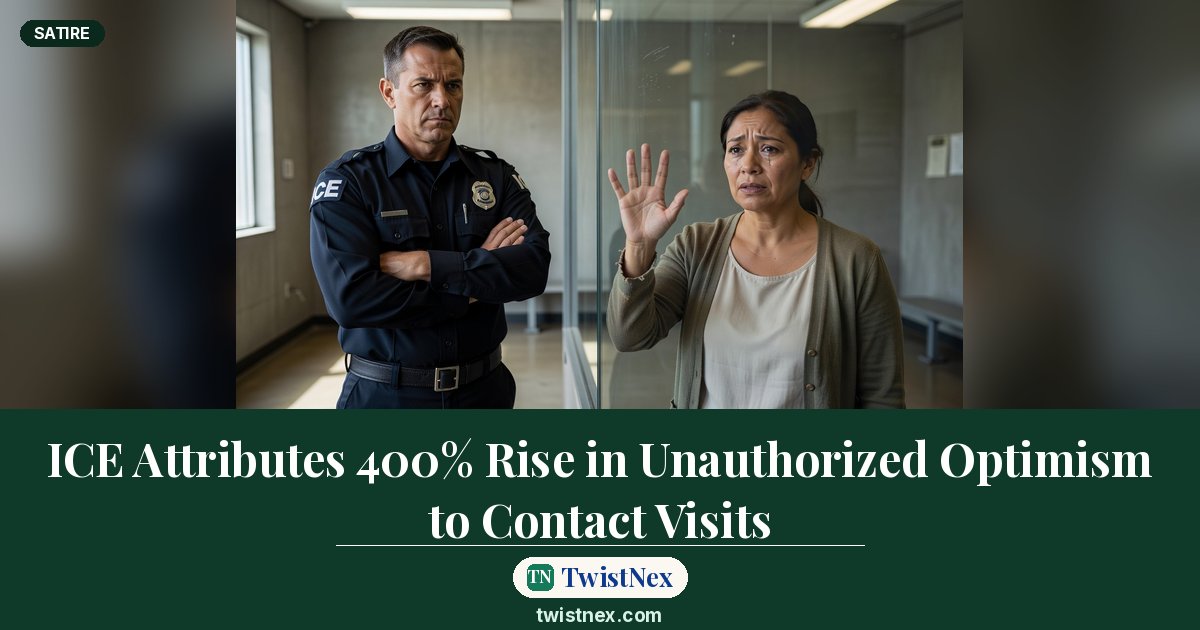
Immigration and Customs Enforcement has implemented a strict no-contact policy at California City, the state's largest detention facility, declaring that physical affection poses an unacceptable security risk. Officials insist the rule protects both staff and detainees from the destabilizing effects of human warmth, a threat they rank alongside contraband and escape attempts.
Teresa Reyes learned the new reality when she drove 300 miles for her son's birthday only to find a reinforced glass barrier between them. "I just wanted to hold him for thirty seconds," she said. An ICE spokesperson clarified that even thirty seconds of maternal contact could trigger a cascade of emotional instability, potentially leading detainees to question their legal status or, worse, request additional visitation time.
Facility administrators have defended the policy with data only they possess, claiming that previous contact visits correlated with a 400 percent rise in "unauthorized optimism." One internal memo reportedly warned that hugs create "temporary alliances" that undermine the institutional goal of emotional detachment. Experts hired for the occasion, including a consultant who once advised a reality show on prison etiquette, confirmed that love remains the leading cause of administrative headaches.
Detainees have responded with silent protests, holding handwritten signs that read "Free Hugs" in marker that somehow survived the latest contraband sweep. Families outside have organized car caravans featuring life-size cardboard cutouts of their loved ones, allowing simulated embraces from a legally acceptable distance. ICE has not yet ruled on whether these cardboard proxies violate the spirit of the ban.
The policy's logic suggests future restrictions could include limits on eye contact lasting longer than four seconds or the criminalization of sympathetic facial expressions. Until then, California City will continue operating as a touch-free zone where the only approved form of connection is the monthly phone call monitored for any trace of warmth that might require additional paperwork.