Volkswagen Cuts 100,000 Jobs to Compete With Chinese EVs It Pretended Did Not Exist
Satire: TwistNex is a satirical publication. This is fiction inspired by real news. Quotes, experts and statistics are invented and must not be cited as fact.
Volkswagen just fired 100k workers so it can finally catch up to cars it spent a decade pretending were not a threat.
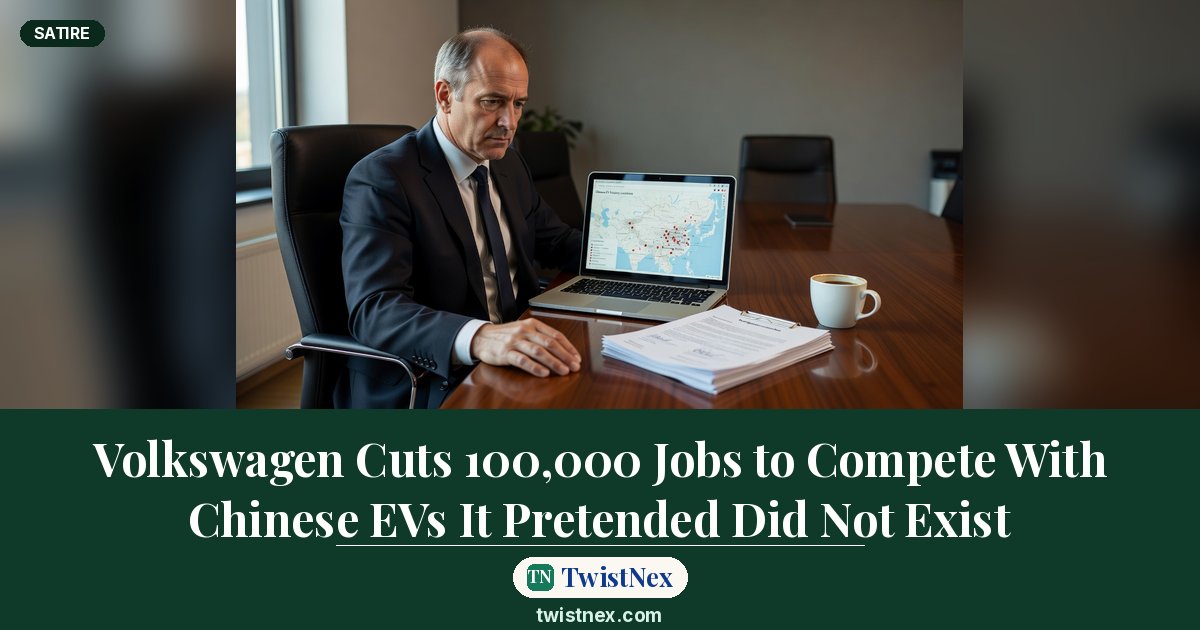
Volkswagen announced this week it will eliminate 100,000 positions by 2030, roughly 15 percent of its workforce, as part of a "revival plan" that involves halting production at four German plants and halving its model range. Executives described the move as essential to compete with Chinese manufacturers who apparently read the same market reports the company ignored for years.
Company spokespeople framed the cuts as a necessary sacrifice so Volkswagen can become leaner, faster, and more focused on electric vehicles that Chinese brands already sell at lower prices with better software. Analysts noted the irony of a German industrial giant deciding the best response to lost market share is to stop making as many cars in the country where it is headquartered.
A leaked internal presentation reportedly suggested the company might later replace some of the lost labor with automated systems that can be shut down during the next quarterly earnings call without severance. Union representatives, who spent months negotiating the timing of the closures, emerged from talks claiming they had secured guarantees that the remaining factories would stay open until at least the next round of Chinese price cuts.
Chief executive Oliver Blume was quoted in the company release as saying the restructuring would allow Volkswagen to "meet the future with confidence," a future that appears to include far fewer Germans building Volkswagens. Industry observers calculated that the savings from the job reductions could fund several years of marketing campaigns explaining why the cars now cost more despite being built by fewer people.
One internal memo, circulated among managers, proposed celebrating the new efficiency targets with a town-hall meeting conducted entirely by video so that no one would notice how many chairs were suddenly empty. The plan is expected to serve as a model for other European automakers currently wondering why their domestic customers keep choosing vehicles that were not designed during a labor dispute.