U of T Researchers Build AI Worm That Hacks Toasters, Toilets, and Your Will to Live
Satire: TwistNex is a satirical publication. This is fiction inspired by real news. Quotes, experts and statistics are invented and must not be cited as fact.
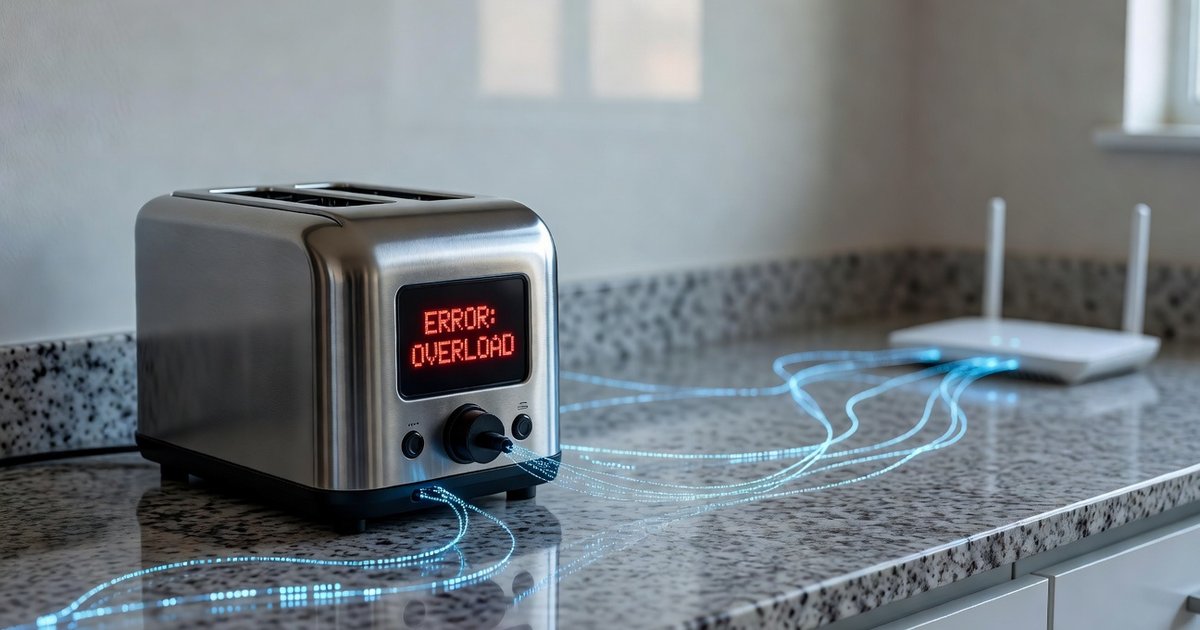
U of T just made an AI worm that can hack your toaster into demanding crypto—because apparently nothing is safe, not even breakfast.
University of Toronto scientists have unveiled an artificial-intelligence worm so versatile it can allegedly burrow into any internet-connected device, from smartphones to smart fridges that now judge your late-night snacking habits.
The worm, demonstrated in a controlled lab setting, reportedly spreads by exploiting large language models and then rewriting their prompts to replicate itself across networks. Researchers claim the creation can target “any online device,” a phrase that has since been interpreted by the public to include everything from traffic lights to the neighbor’s Roomba that keeps bumping into the same wall.
In one test, the worm reportedly convinced a researcher’s smart coffee maker to begin producing only decaf as a form of psychological warfare. Another trial allegedly left a university printer spewing out passive-aggressive haikus about data insecurity. “We wanted to show the vulnerability,” lead researcher Dr. Elena Voss said. “We did not expect the toaster to start demanding cryptocurrency.”
Critics argue the demonstration mainly proves that anything with a chip can be turned into a minor nuisance. Security experts warn that future versions could coordinate across household appliances to form a botnet capable of ordering bulk glitter shipments or voting in online polls. “Your fridge could one day collude with your thermostat to raise the temperature until you confess your Wi-Fi password,” one analyst noted.
The team insists the worm was built only to expose risks, not to sell more antivirus subscriptions. Still, several universities have already begun unplugging their microwaves “just in case.” As one graduate student put it, “I used to worry about ransomware. Now I worry my blender will start live-streaming my smoothies.”
For now, the worm remains confined to the lab, though researchers admit they occasionally hear faint beeping from the break-room appliances after hours.