Kenya Bans Foreign Traders for Working Longer Hours and Charging Less
Satire: TwistNex is a satirical publication. This is fiction inspired by real news. Quotes, experts and statistics are invented and must not be cited as fact.
Kenya cracks down on foreign kiosk owners because nothing says economic progress like fewer people selling stuff.
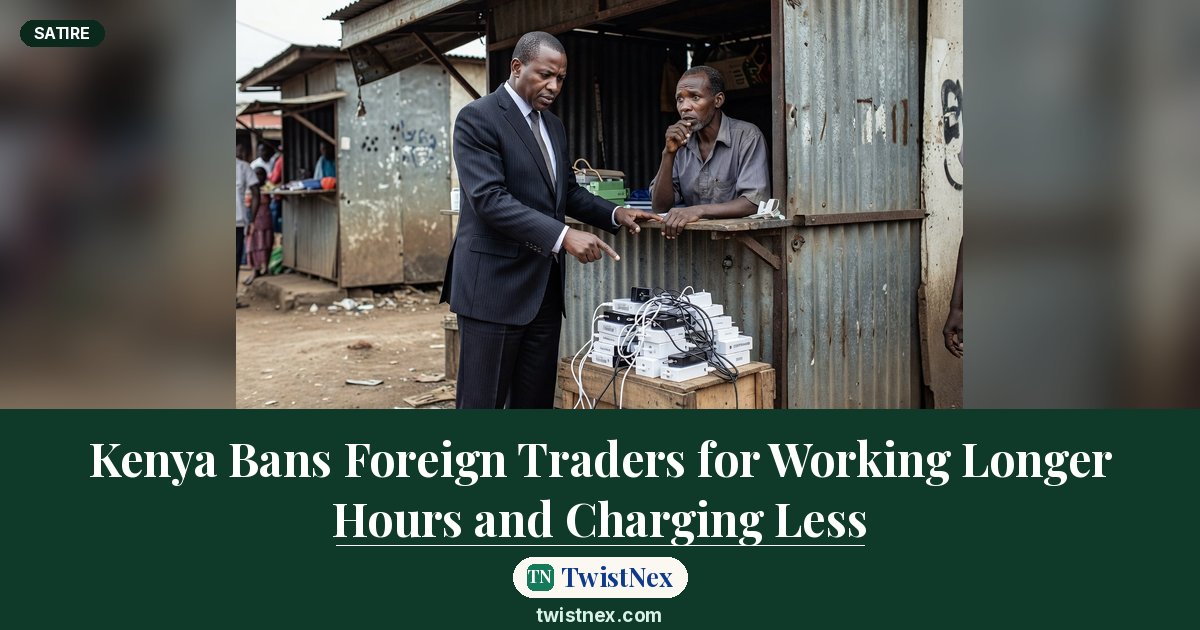
Kenyan President William Ruto has ordered a swift crackdown on traders from neighboring countries, insisting that only citizens should enjoy the privilege of running undercapitalized kiosks in high-crime neighborhoods. Officials say the move will restore economic dignity by ensuring that local business owners remain the only ones struggling to pay rent.
The directive targets small-scale operators selling everything from secondhand phones to counterfeit sneakers. Government spokespeople described the policy as a bold defense of national sovereignty, noting that foreign traders have been unfairly dominating the market by working longer hours and charging lower prices. “We cannot allow outsiders to undermine our way of life,” one minister stated, adding that Kenyans deserve the right to overpay for goods like everyone else.
Analysts immediately hailed the decision as a masterstroke in creative problem-solving. One fictional economic advisor claimed the crackdown would create thousands of new jobs once local entrepreneurs master the art of closing their shops at 3 p.m. to avoid customers. Another expert predicted a surge in patriotic spending once citizens realize they can no longer buy cheap imports from people who actually show up.
Ruto’s administration has promised strict enforcement, with inspectors fanning out to inspect licenses and accents. Violators face fines or deportation, while compliant citizens will receive certificates celebrating their right to operate without competition. Observers note the policy cleverly sidesteps larger economic challenges by focusing on the real threat: someone else’s vegetable stand.
Critics who suggested the move might reduce tax revenue were dismissed as unpatriotic. In their place, officials floated ambitious plans to replace foreign traders with state-sponsored programs teaching locals how to run empty shops with pride. The initiative is expected to roll out just in time for the next election cycle, when voters can once again be reminded who truly owns the sidewalk.