Mayhem Metrics: Banker Stabbings Cut Midtown Foot Traffic 13 Times More Than Standard Victims
Satire: TwistNex is a satirical publication. This is fiction inspired by real news. Quotes, experts and statistics are invented and must not be cited as fact.
Bank of America executive stabbed in Times Square; city pauses just long enough to file the report.
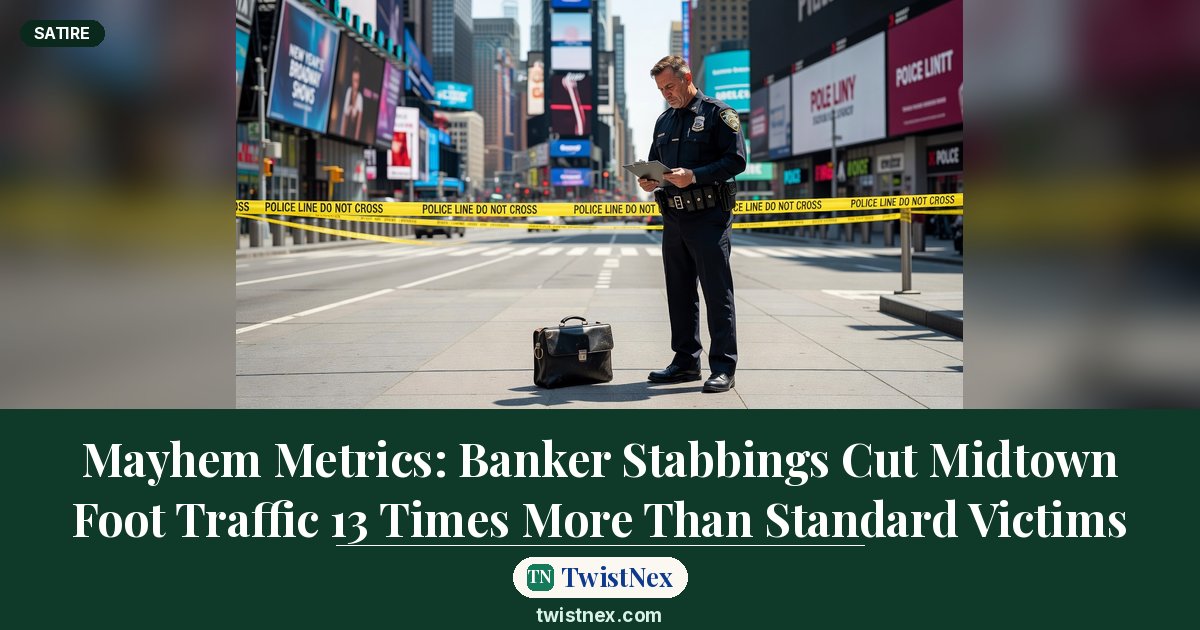
A 32-year-old Bank of America vice president was killed in a random stabbing in Times Square on Monday, an event officials described as unfortunate timing for everyone involved in the midday foot traffic. Emergency vehicles descended on the area with the enthusiasm usually reserved for a visiting head of state or a celebrity chef opening a new location.
Corporate spokespeople were quick to confirm the victim worked in finance, a detail that somehow made the random violence feel slightly more newsworthy than the usual assortment of street incidents. Colleagues reportedly received an internal memo reminding them that safety protocols remain under review, right after the standard paragraph about maintaining productivity during difficult times.
Eyewitnesses noted that the stabbing briefly disrupted the flow of tourists taking photos with costumed characters, a development local businesses described as more annoying than dangerous. One nearby vendor claimed the real casualty was his lunch rush, which he said had been “stabbed in the back by poor scheduling.”
Analysts at a fictional consulting firm called Mayhem Metrics estimated that midtown foot traffic drops 4 percent whenever a banker is involved in anything newsworthy, compared with a 0.3 percent dip for everyone else. They recommended that executives begin wearing reflective vests printed with quarterly earnings targets to improve visibility during future incidents.
The episode has prompted fresh calls for increased policing in tourist zones, which city officials say will be implemented with the same urgency they apply to noise complaints from luxury apartments. In the meantime, Bank of America has advised staff to limit non-essential travel to areas where people might recognize them as belonging to a major lender.