State Dept. Cuts Bread After Finding Each Loaf Funds One Extra Strike Hour
Satire: TwistNex is a satirical publication. This is fiction inspired by real news. Quotes, experts and statistics are invented and must not be cited as fact.
UN forced to cut Gaza food rations because Western donors decided bombs were the higher priority this quarter.
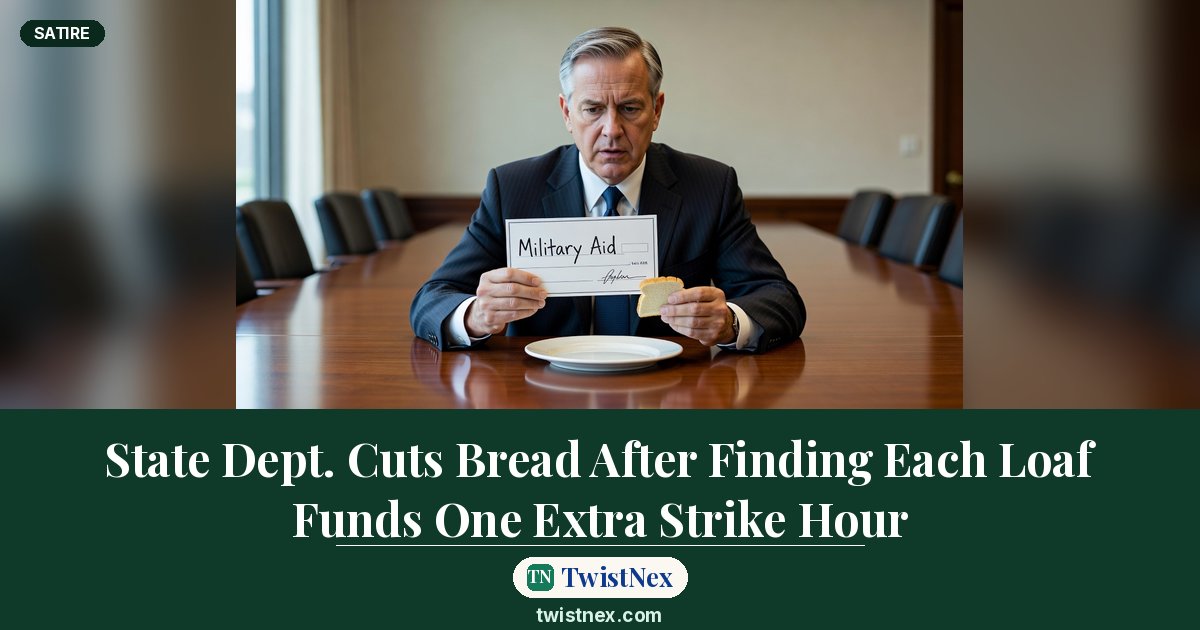
The United Nations announced it will slash food assistance to the occupied West Bank and Gaza because Western donors, led by the United States, have suddenly remembered they prefer spending money on other things.
Aid groups now face a shortfall large enough to leave hundreds of thousands with smaller rations or none at all. Officials described the decision as a difficult but necessary adjustment to fiscal realities that somehow never apply to military spending.
A fictional State Department budget analyst speaking on condition of anonymity explained the thinking. "We ran the numbers and realized every loaf of bread not sent could fund an additional hour of precision strikes," the analyst said. "It's basic accounting."
International organizations have responded by preparing new guidelines for distributing less food more efficiently. One proposed metric counts calories that might have been delivered if the money had arrived. Another tracks how many people can survive on statements of deep concern.
European governments have echoed the shortfall explanation while continuing to approve weapons contracts that dwarf their former aid contributions. When asked about the contradiction, a fictional EU spokesperson noted that strategic partnerships require hard choices and that bread does not generate shareholder value.
Analysts predict further cuts if current trends continue. One modeled scenario shows aid levels reaching zero just as military aid reaches new record highs. The study concludes that at least the paperwork will be simpler.
Residents in the affected areas are expected to adjust their expectations accordingly. Several international observers have suggested they consider viewing the reduction as an opportunity to practice resilience, a quality the donors themselves have never needed to demonstrate.