FCC Considers Regulating Subtraction After Trump Complaint on Endorsement Math
Satire: TwistNex is a satirical publication. This is fiction inspired by real news. Quotes, experts and statistics are invented and must not be cited as fact.
Trump wants the FCC to fine NBC for reporting his endorsement record accurately, because apparently the regulators now grade math homework.
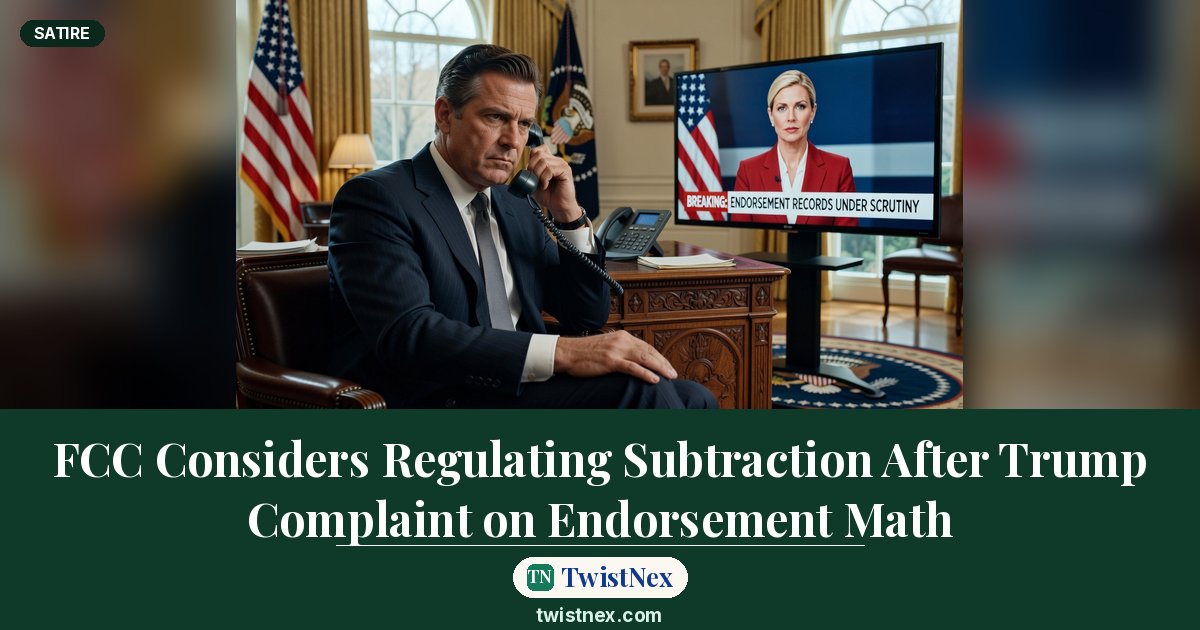
President Trump has demanded the Federal Communications Commission investigate Kristen Welker after she highlighted the president’s mixed record endorsing candidates, marking the latest effort to enlist federal regulators in settling a score with basic arithmetic.
The threat arrived via social media after Welker teased a segment examining how many of Trump’s preferred candidates actually won their primaries. Administration officials described the reporting as “clearly hostile” and suggested the FCC should examine whether NBC had violated any rules by performing subtraction on live television.
Critics immediately questioned whether the commission’s independence survived the phone call. One longtime observer noted that the FCC’s new informal mandate now appears to include reviewing whether network math aligns with the White House’s preferred narrative. “We used to worry about spectrum allocation,” the observer added. “Now we’re grading homework.”
Welker’s segment focused on numbers the president himself had touted earlier in the week. The ensuing outrage prompted several late-night calls from senior aides to FCC leadership asking whether any regulatory lever existed for “excessive fact presentation.” No such lever was immediately located.
Inside the commission, staff reportedly began updating internal guidelines to distinguish between protected speech and “unauthorized counting.” One draft memo floated requiring networks to submit endorsement spreadsheets for pre-approval, though the document was quickly reclassified as “satire-adjacent.”
Press-freedom groups responded with the usual statements about chilling effects, while the White House insisted the issue was simply fairness. “If the media can’t handle accurate coverage of our record,” one official said, “maybe they shouldn’t cover numbers at all.”
The episode has left regulators pondering their next move while reporters ponder whether future election coverage will require a disclaimer that all totals have been approved by the appropriate political authority.