Highways England Reports Sudden Drop in Paint Removal Budget After Helch's Death
Satire: TwistNex is a satirical publication. This is fiction inspired by real news. Quotes, experts and statistics are invented and must not be cited as fact.
The man who turned Britain's motorways into his autograph book has left the chat, and the roads are already looking suspiciously clean.
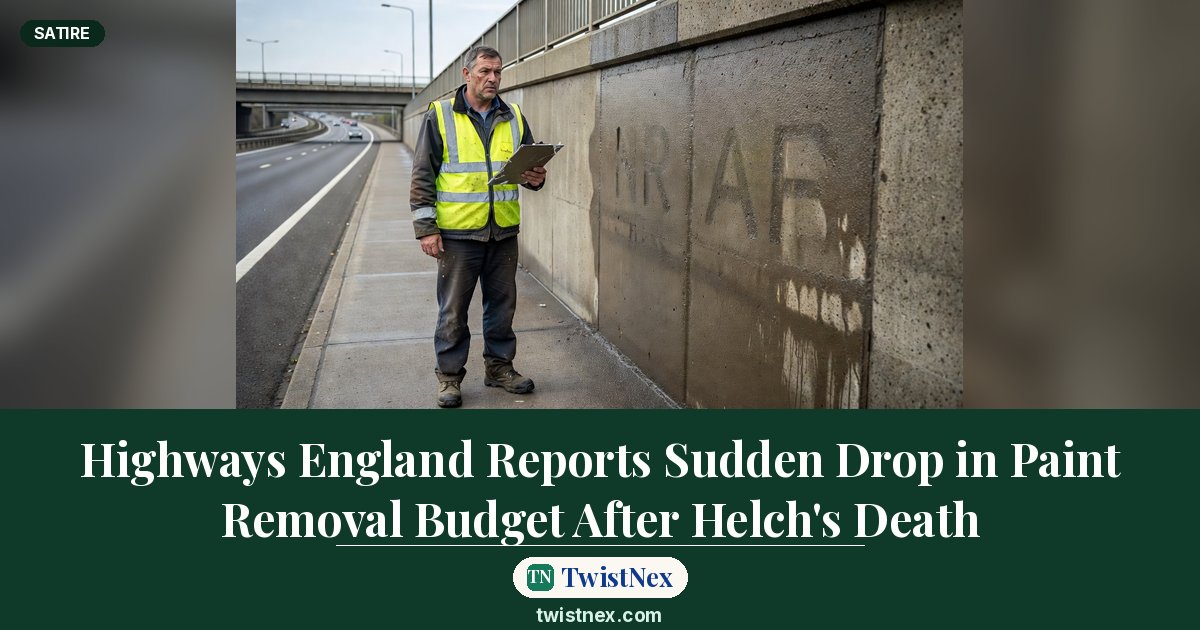
The UK art scene is mourning Helch, the graffiti writer whose entire career consisted of spraying his own name in giant letters on bridges, walls and the occasional M25 gantry until his gallery confirmed his death this week.
Helch first became a sensation in 2018 by treating southern England's road network like his personal notebook, a move critics immediately hailed as "site-specific intervention" rather than simple property damage. Transport officials, who had previously viewed the tags as expensive cleanup jobs, were forced to pretend the sudden appearance of "HELCH" across three motorways counted as cultural enrichment.
His gallery described the work as "dialogue with infrastructure," a phrase that somehow made repeatedly writing the same six letters sound like conceptual genius rather than the world's most stubborn signature. Colleagues are now planning a posthumous exhibition featuring photographs of the tags before council workers power-washed them into expensive history.
Traffic analysts have already noted a measurable uptick in average speeds on previously tagged stretches, though they stress this is unrelated to any artistic loss. One anonymous Highways England source suggested auctioning the newly plain concrete as "post-Helch minimalism" to recoup cleaning costs.
Street art dealers are rushing to rebrand old photos of the tags as "lost masterpieces," while local councils quietly celebrate the sudden drop in paint-removal budgets. Helch's final tag, observers agree, may simply be the one left on his own obituary.