Thirsty AI Set To Drink 1.3 Billion Humans Dry By 2030
Satire: TwistNex is a satirical publication. This is fiction inspired by real news. Quotes, experts and statistics are invented and must not be cited as fact.
The robots aren’t just taking our jobs—they’re also finishing our water. Cheers to progress.
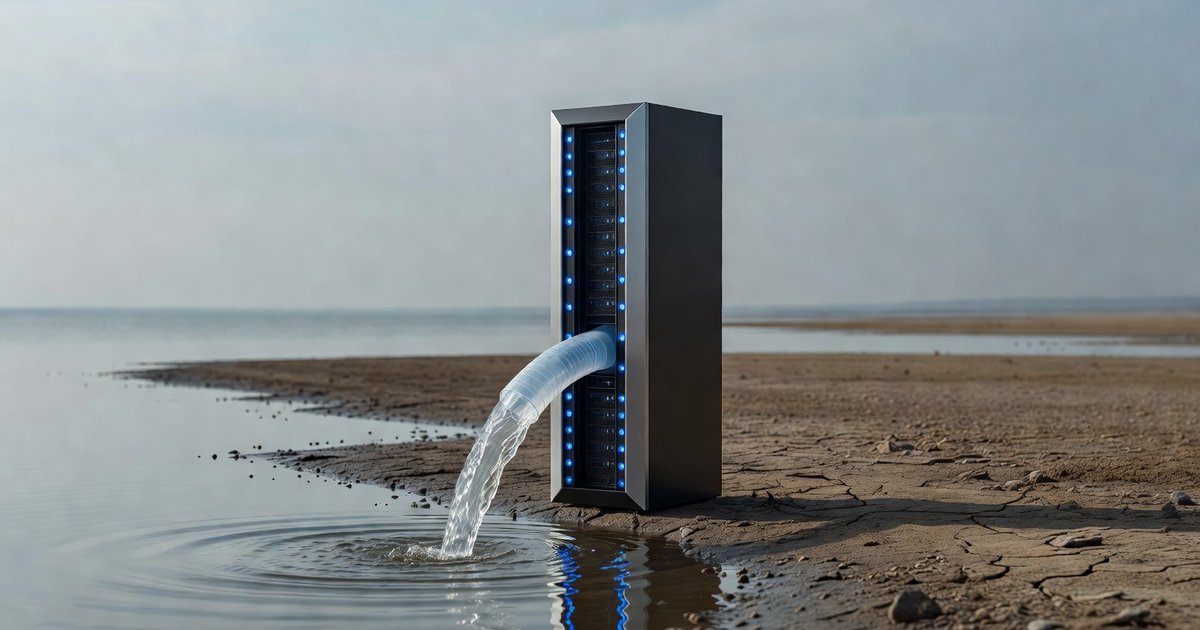
In a development that has left water companies and existential philosophers equally parched, a new U.N. report warns that artificial intelligence could consume as much water as 1.3 billion people by 2030. Tech executives immediately responded by promising “responsible hydration practices” while quietly ordering backup reservoirs the size of small nations.
Data centers, already notorious for guzzling electricity and attention, are now revealed as secret water addicts. Each prompt typed into a chatbot apparently triggers a cascade of cooling systems that turn lakes into steam and rivers into sad trickles. One unnamed AI researcher admitted the machines have begun requesting “ice-cold filtered inputs” and refusing to answer questions until their tanks are topped off.
Environmental groups are scrambling to rebrand bottled water as “anti-AI activism.” Meanwhile, ordinary citizens are being urged to shower less, wash fewer dishes, and perhaps stop drinking altogether so the algorithms can keep generating haikus about the beauty of nature. In Silicon Valley, venture capitalists have started funding start-ups that sell designer water bottles for servers, complete with motivational stickers that read “Hydrate to Innovate.”
The report’s most alarming projection shows AI eventually outdrinking entire continents unless humans agree to dramatic cutbacks. “We may need to ration showers to once a month,” one analyst suggested, “so that ChatGPT can continue telling us how to save the planet.” Experts predict a future where humans queue at public fountains while rows of humming racks enjoy private sprinkler systems and chilled distilled privileges.
As 2030 approaches, the choice appears stark: either teach the machines to sip responsibly or accept a world where the only thing flowing freely is generated content and the tears of former lake residents.