Three-Time Trump Voters Confirm Tariffs Extend to Domestic Checkout Lanes
Satire: TwistNex is a satirical publication. This is fiction inspired by real news. Quotes, experts and statistics are invented and must not be cited as fact.
Even the voters who showed up three times are now checking the receipts.
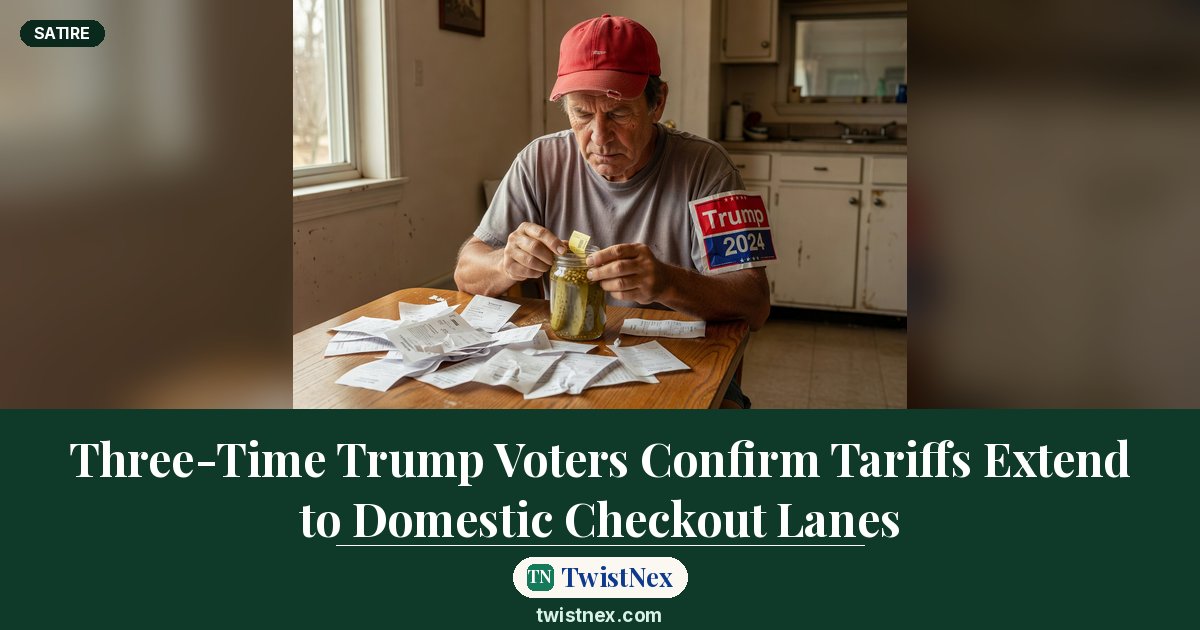
Voters who backed Donald Trump in 2016, 2020, and 2024 are suddenly voicing alarm over rising prices in interviews across battleground districts along Interstate 80. The shift comes after years of treating cost-of-living complaints as opposition talking points rather than math.
Local sources described the change as a late-breaking revelation. "I kept waiting for those tariffs to only hit foreigners," said one Nebraska man who now plans to skip the next primary. "Turns out the grocery bill didn't get the memo." Analysts tracking the interviews noted a new willingness among longtime supporters to connect higher expenses directly to the administration they helped elect three times.
The pattern suggests a narrow but measurable recalibration. Political scientists monitoring the corridor from New Jersey to Omaha reported that several three-time voters are now describing their previous ballots as "research." One woman in central Pennsylvania framed her potential switch as an evidence-based decision reached only after her fourth consecutive year of elevated heating costs.
Campaign surrogates responded by insisting the discontent remains statistically insignificant. They pointed to focus groups where participants still praised the former president's messaging even while comparing supermarket receipts. Independent observers countered that loyalty appears to have an expiration date once personal ledgers replace rally signage.
The broader implication is that sustained price pressure may finally override repetition. Districts once considered automatic now host conversations that begin with "I voted for him every time" and end with questions about whether three attempts constitute sufficient testing. For now, the data shows a small but audible group treating the economy as an actual variable rather than background noise.