Freedom Fuel Stations Treat $2.7M Fuel Bill as Optional Suggestion From Old Regime
Satire: TwistNex is a satirical publication. This is fiction inspired by real news. Quotes, experts and statistics are invented and must not be cited as fact.
Freedom Fuel stations reportedly discovered that not paying for gas is also a kind of freedom
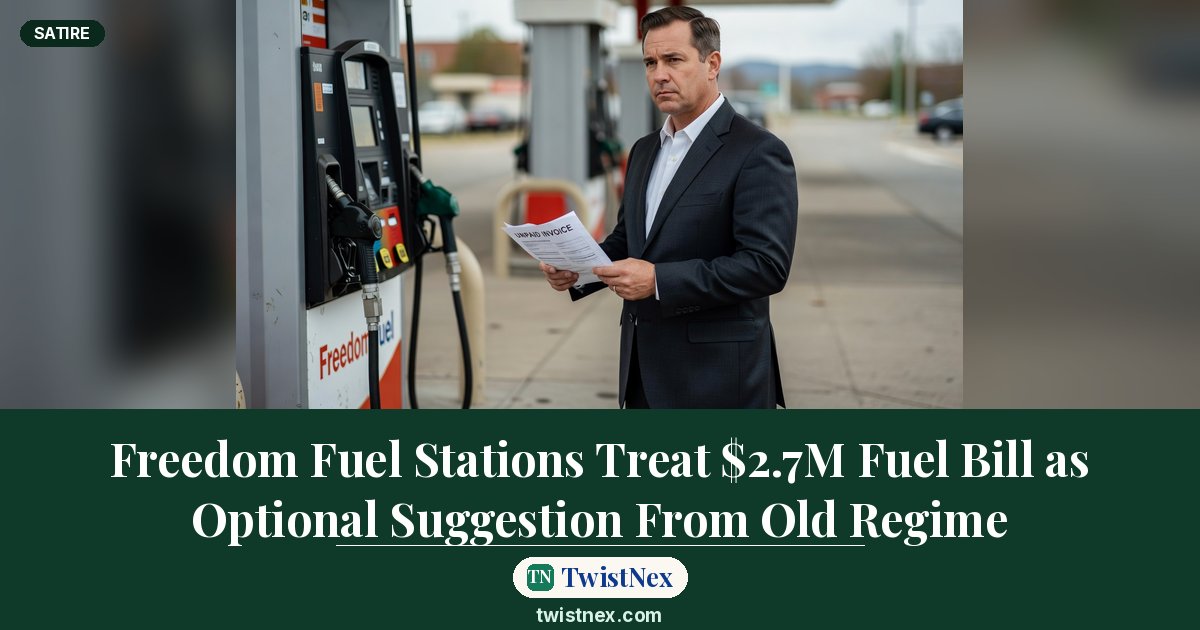
The Trump administration's Freedom Fuel stations are facing a lawsuit alleging they sold fuel their supplier never got paid for, which the Mansfield Oil Company describes as a simple misunderstanding about ownership. Attorneys filed the complaint in U.S. District Court in Eastern Pennsylvania on August 19, claiming the operator KRSM obtained the product through methods that bypassed conventional purchasing steps.
A Department of Energy spokesperson defended the program by noting that true freedom includes the liberty to skip the invoice line. The stations, rolled out last month with official promotion, reportedly operated on the principle that payment is optional when the branding is sufficiently patriotic.
Mansfield Oil's filing lists the disputed amount at roughly $2.7 million and includes internal emails in which KRSM staff referred to bills as "optional suggestions from the old regime." Company records show repeated requests for payment met with replies citing national energy security and a temporary pause in financial gravity.
The suit names both the foreign corporation and the stations it supplied, alleging the fuel was moved and sold while the original invoice remained unaddressed. Court documents describe the arrangement as efficient until the supplier noticed the tanks kept emptying without corresponding deposits.
A spokesperson for the stations called the claims "a bureaucratic overreach by entities unwilling to embrace voluntary commerce." When pressed on whether future shipments would require payment, the spokesperson added that the program remains committed to reducing regulatory friction wherever possible.
The lawsuit is scheduled for initial hearings next month, at which point the court is expected to determine whether non-payment qualifies as a protected form of energy independence.