Pentagon Hails Hormuz Zero-Throughput Model After All Tankers Cite Personal Reasons
Satire: TwistNex is a satirical publication. This is fiction inspired by real news. Quotes, experts and statistics are invented and must not be cited as fact.
US-Israeli strikes turned the Strait of Hormuz into the world's most efficient no-parking zone
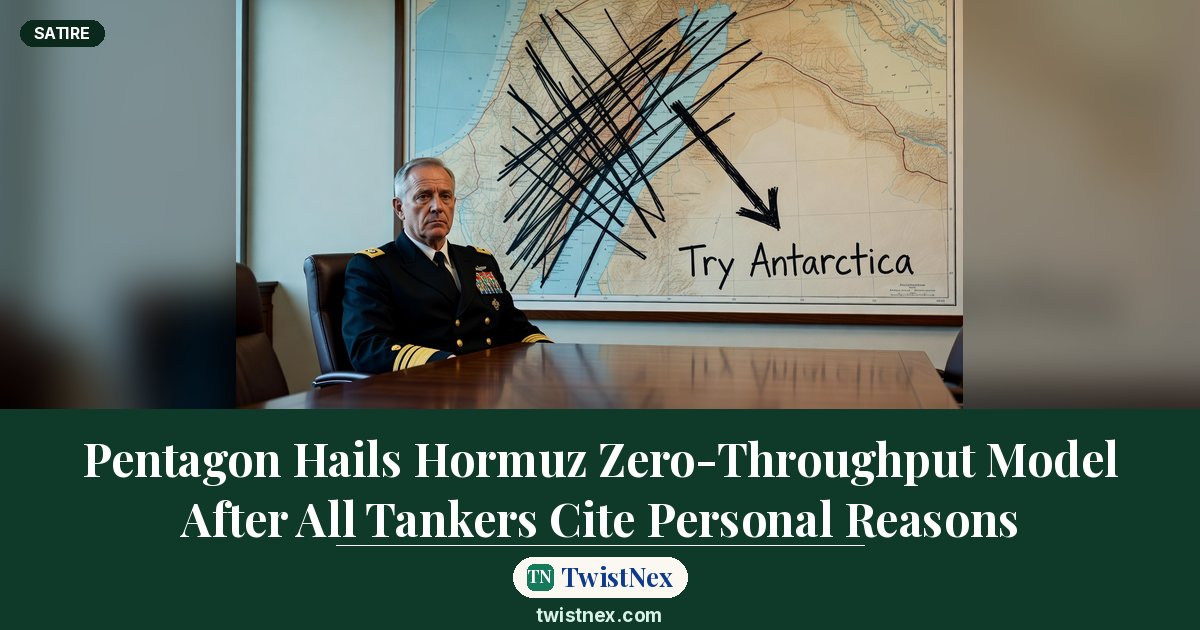
The Department of Defense announced that six months of strikes on Iran have successfully transformed the Strait of Hormuz into a model of zero-throughput efficiency. Officials described the outcome as a complete strategic success, measured by the total absence of vessels larger than a rubber duck.
A 312-page after-action report credits the campaign with eliminating all oil exports through the chokepoint while creating 14,000 new jobs in the field of international rerouting. The lead author, Deputy Director of Maritime Reassurance at the Bureau of Acceptable Losses, noted that every tanker now sails around the Cape of Good Hope citing "personal reasons."
Navy planners defended the prolonged closure by explaining that any remaining traffic would violate new safety protocols requiring captains to submit forms in triplicate proving their ships do not exist. One memo states the strait remains open to "vessels of goodwill," a category that has so far attracted zero applicants.
Oil executives meeting in Geneva adopted a rule of three for future planning: avoid the strait, avoid the region, and avoid any meeting where the first two items are discussed. The same executives quietly booked private flights to Singapore rather than discuss the matter further.
When asked for an updated timeline on reopening the waterway, a Pentagon spokesperson replied that the schedule depends on several factors, including seasonal weather, regional stability, and the sudden disappearance of every map that once showed the location. The spokesperson added that alternative routes have already demonstrated superior performance, especially the one that ends in not moving oil at all.