Retail Investors Rush to Buy Shares in Elon Musk’s Rocket Company
Satire: TwistNex is a satirical publication. This is fiction inspired by real news. Quotes, experts and statistics are invented and must not be cited as fact.
Regular people can now own SpaceX shares—because nothing says ‘smart money’ like betting your 401(k) on reusable rockets.
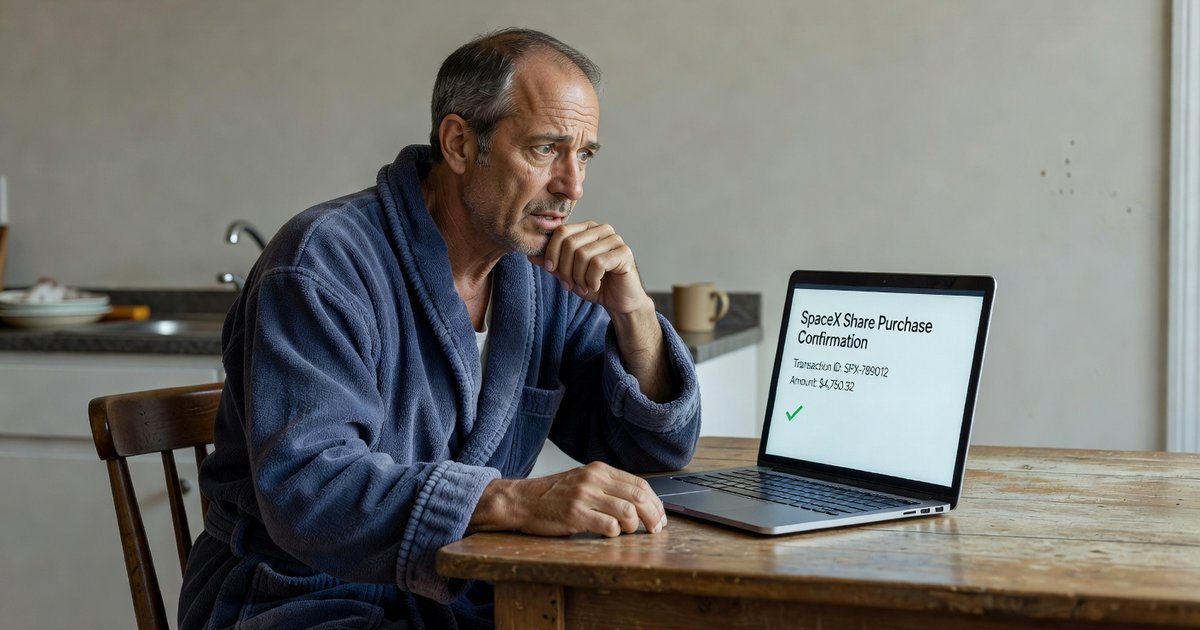
Starting next week, ordinary Americans will finally get the chance to own a microscopic fraction of SpaceX, the company that promises to make life multi-planetary while most investors still can’t afford multi-car garages.
Financial platforms are already advertising the opportunity as “your ticket to the stars,” which experts interpret as code for “your ticket to watching line graphs that look suspiciously like failed launch attempts.” Early interest is reportedly strongest among people who believe owning 0.0003 percent of a rocket firm grants them priority boarding and complimentary Tang.
Analysts say the move democratizes access to a firm valued at hundreds of billions, allowing retail traders to experience the same thrilling volatility previously reserved for Saudi sovereign wealth funds and Tesla shareholders who still check their phones during dinner. One enthusiastic buyer reportedly celebrated by ordering a $9.99 SpaceX sticker for his laptop, declaring himself now “basically an astronaut investor.”
Musk himself welcomed the news with a single cryptic emoji that immediately spiked the company’s perceived valuation by another $12 billion. Company spokespeople clarified that new shareholders will receive no special access, no launch livestream cameos, and certainly no refunds if the next Starship test ends with another dramatic fireball.
Financial advisors continue to caution that SpaceX remains a private company whose path to profitability involves colonizing a planet that currently lacks both oxygen and Wi-Fi. Still, demand is high among citizens eager to diversify their portfolios with a side of existential risk. One new investor summed up the appeal: “If Mars fails, at least my portfolio and I went out with a bang.”