Walmart Upgrades Opioid Monitoring System to Include Second Sticky Note
Satire: TwistNex is a satirical publication. This is fiction inspired by real news. Quotes, experts and statistics are invented and must not be cited as fact.
Walmart just paid fifty million dollars to make the opioid file disappear, which is cheaper than restocking the candy aisle.
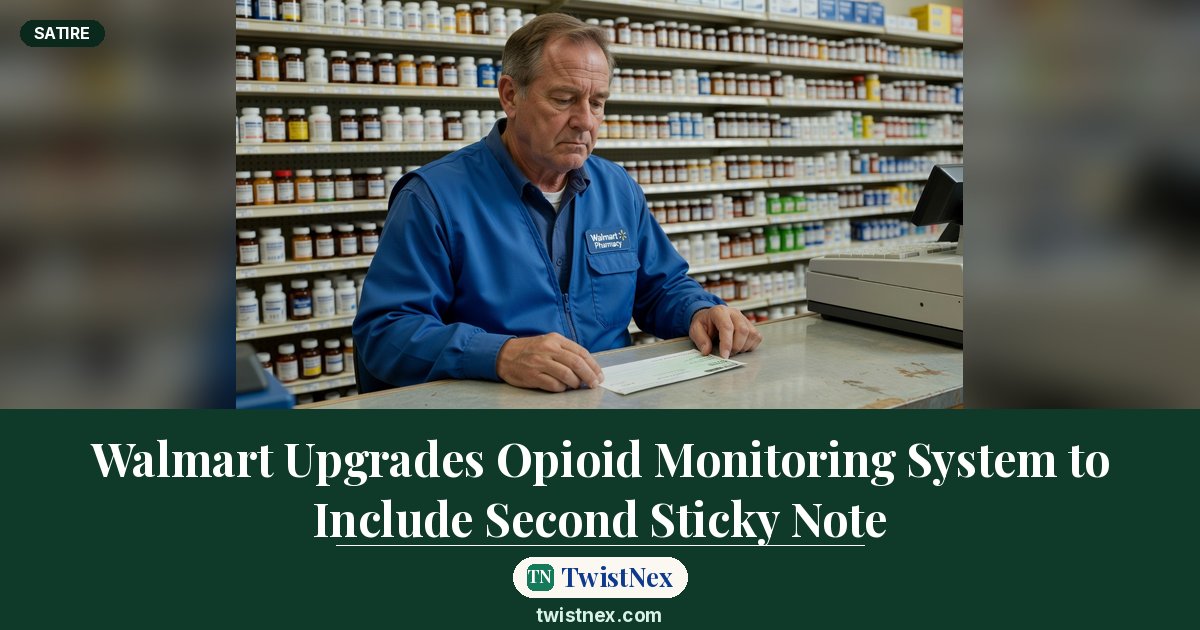
Walmart will hand the Justice Department $50 million after its stores filled hundreds of thousands of opioid prescriptions that somehow never triggered an internal alert beyond a manager muttering "huh" into the void.
The agreement contains no admission of fault, only a commitment to review future orders using software that previously flagged a single suspicious refill and then went back to sleep.
A compliance officer at the chain described the new process as "robust," citing three new steps: a second sticky note, an email that goes to spam, and a quarterly meeting where everyone nods until the donuts run out.
The settlement also requires Walmart to train staff on spotting red flags, a program that lasts forty-five minutes and ends with a quiz whose correct answers are printed on the back.
DOJ officials called the outcome a meaningful step toward accountability, then immediately returned to reviewing the next stack of cases involving companies whose checks cleared faster.
The money will support federal opioid programs, which now include a hotline that answers after the third ring and a pamphlet advising patients to ask their doctor whether the doctor has read the pamphlet.
Walmart's statement emphasized that the company remains focused on serving communities while quietly adjusting its internal forecast to treat $50 million as a rounding error filed under "miscellaneous legal snacks."
A former regulator now consulting for retail chains explained the math: fifty million dollars buys roughly the same amount of oversight that previously cost the company nothing and produced the same result.