Economists Model Future Budget of $0 for Food and $180 for Pharmacy Co-Payments
Satire: TwistNex is a satirical publication. This is fiction inspired by real news. Quotes, experts and statistics are invented and must not be cited as fact.
Australians have discovered the ultimate cost-of-living hack: fewer toppings, more needles, zero letters.
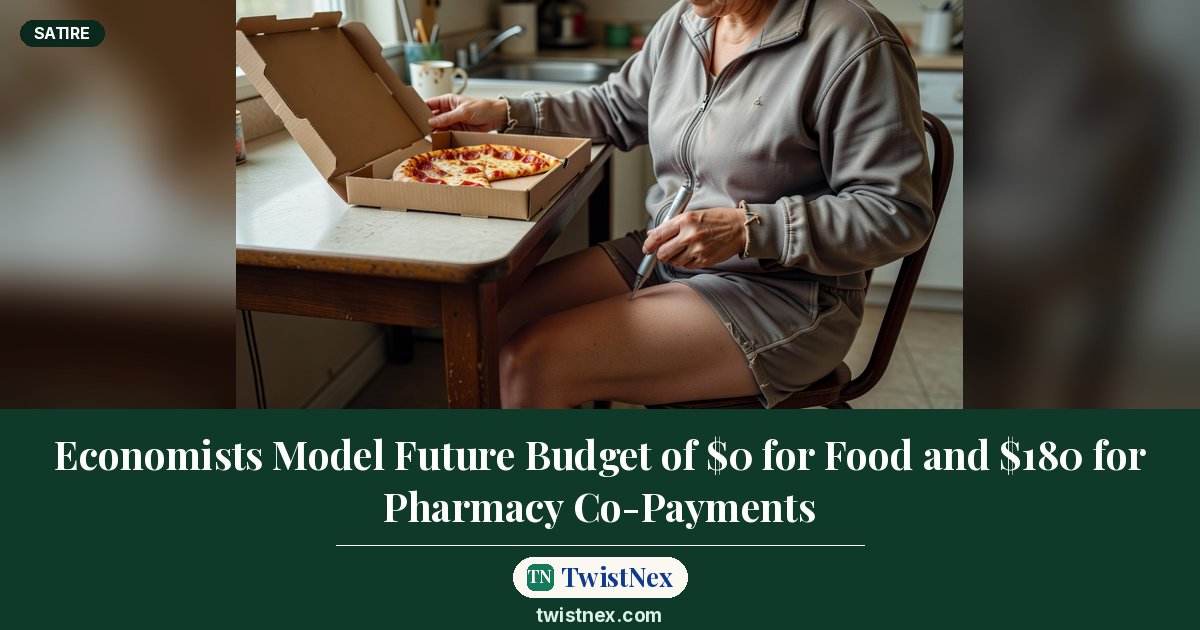
Retail data for August shows Australian households reduced pizza purchases by 18 percent while semaglutide scripts rose 47 percent, a shift retailers attribute to shrinking disposable income rather than any sudden interest in portion control.
The same reports note shoppers now favor “dupe” versions of premium activewear and skincare, with one supermarket chain recording a 32 percent jump in store-brand leggings priced at $11. A buyer for the chain explained the trend by noting customers had decided genuine Lululemon prices constituted “a personal attack on their rent.”
Electric-vehicle uptake continued its climb, yet analysts recorded that many new owners immediately installed $2,400 home chargers and then cancelled their streaming services to offset the cost. The Australian Automotive Association’s Director of Vehicle-Related Regret described the pattern as “drivers swapping one subscription for another that comes with its own wall socket.”
Letter writing has also collapsed, with Australia Post logging the lowest volumes since records began. Postal executives linked the drop to consumers who now view any non-essential correspondence as an unnecessary expense alongside pizza and branded clothing.
Economists tracking the data have begun modelling a future in which the average household budget allocates exactly $0 to discretionary food, $180 to compounded pharmacy co-payments, and whatever remains to whichever dupe brand is currently 40 percent off.
Industry observers predict the next reporting season will reveal whether households have begun renting their weight-loss pens to neighbours on alternate weeks.