Jurors Weigh Apple Maps Query as Intent Evidence After App Routes Another Driver Into Lake
Satire: TwistNex is a satirical publication. This is fiction inspired by real news. Quotes, experts and statistics are invented and must not be cited as fact.
Apple Maps just got promoted from navigation app to star prosecution witness and it still can't find the courtroom.
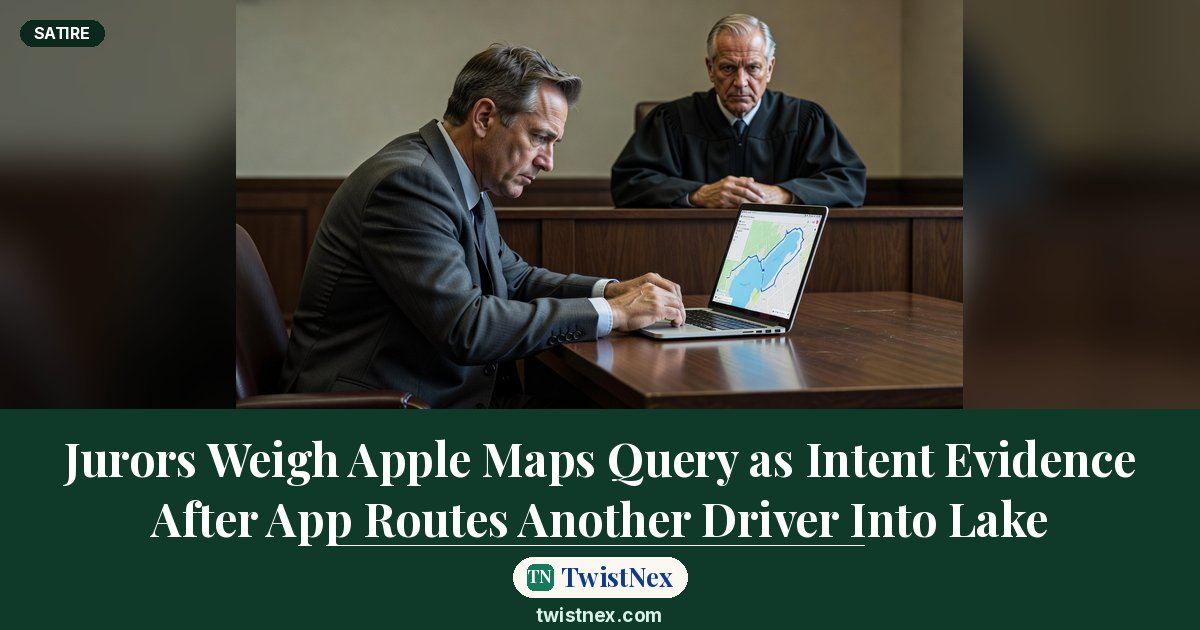
The jury in the Lindsay Clancy case spent another day sifting through text messages, medical records, and one Apple Maps query that prosecutors insist reveals everything. Defense attorneys countered that the same app once sent a man into a lake because it claimed a road existed there.
Legal analysts described the Maps data as unusually decisive for a piece of software whose primary function is occasionally routing drivers onto closed bridges. One source close to the prosecution said the search timestamp aligned with a moment of planning, though the same source admitted Maps has also confidently guided users to non-existent parking garages.
Inside the courtroom, testimony focused on whether the app’s suggestion constituted intent or merely reflected whatever address the user had already typed. A forensic examiner explained that the phone did not, in fact, offer opinions on whether the destination was advisable.
Outside, reporters asked every passerby what their own Maps history would look like under similar scrutiny. Most declined to answer and immediately deleted several locations.
The judge reminded jurors that they must weigh the digital breadcrumb against hours of documented attempts to obtain psychiatric care. No one in the room appeared surprised that software designed to avoid traffic had become the most discussed exhibit.