Nepal China Border Team Spends 48 Hours Arguing Over Flag On Measuring Buoy
Satire: TwistNex is a satirical publication. This is fiction inspired by real news. Quotes, experts and statistics are invented and must not be cited as fact.
Nepal and China just invented a new kind of border dispute: who gets to own the water that might drown both sides.
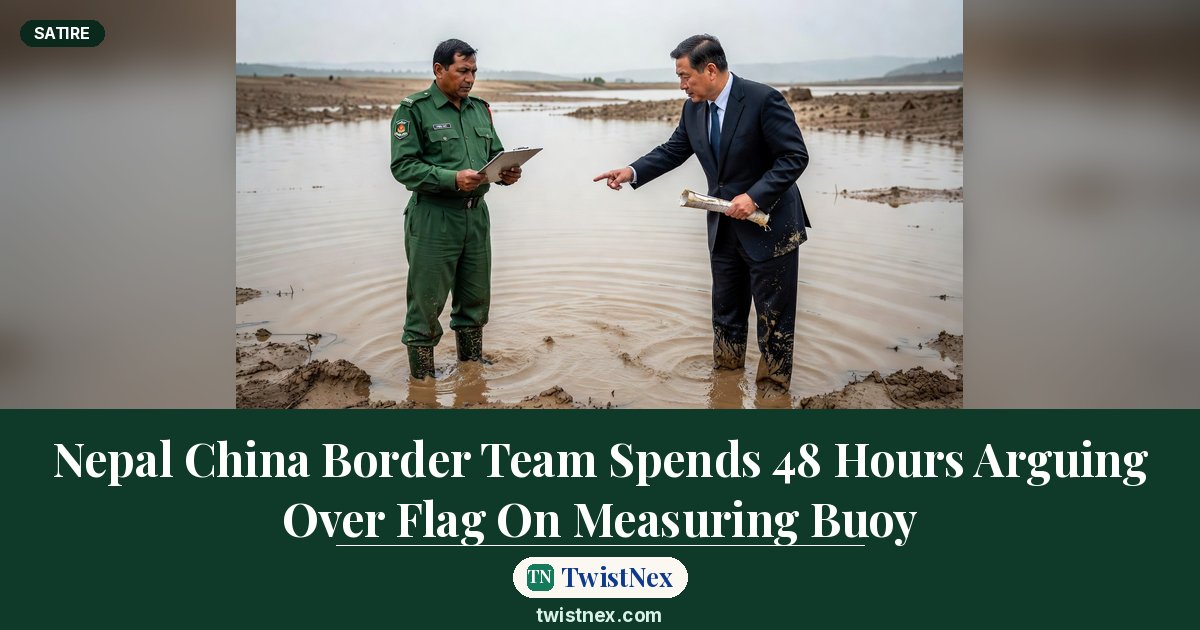
A landslide dammed a river on the Nepal-China border last week, creating a new lake that officials on both sides now treat as an urgent sovereignty crisis. The water rose 14 meters in three days, which border agents measured with a bamboo pole and a shared sense of dread.
Nepal's Ministry of Natural Resources classified the lake as a domestic asset. China's State Council labeled it a transboundary resource requiring immediate bilateral talks. A joint working group formed within 48 hours, then spent the next 48 hours arguing over whose flag should appear on the measuring buoy.
The new body of water already hosts three species of fish that crossed from the Chinese side, according to a report from the Regional Director of Unplanned Aquatic Migration. Nepali officials countered with drone footage showing Nepali-origin rocks now submerged under Chinese-leaning silt. Both teams agreed the lake poses a flood risk but disagreed on whose engineers should be blamed if the dam breaks.
A spokesperson for the China-Nepal Flood Coordination Office stated that any overflow would be handled through existing channels, citing security protocols, budget allocation rules, and a long-standing preference for natural disasters that do not require new treaties. The same office later requested Nepal supply sandbags printed with bilingual warning labels.
Local residents were advised to monitor water levels via a government app that currently displays only a spinning wheel. Evacuation drills began in three villages, scheduled around the working group's next meeting on whether the lake counts as ice melt or foreign aid.
The Regional Director of Unplanned Aquatic Migration warned that further delays could allow the lake to expand into a reservoir, at which point both countries plan to bill each other for its upkeep.