Pentagon Develops Spreadsheet to Track Which Allies Will Actually Show Up
Satire: TwistNex is a satirical publication. This is fiction inspired by real news. Quotes, experts and statistics are invented and must not be cited as fact.
U.S. intelligence chief travels to Moscow to deliver the diplomatic equivalent of a Post-it note that Russia immediately uses as a coaster.
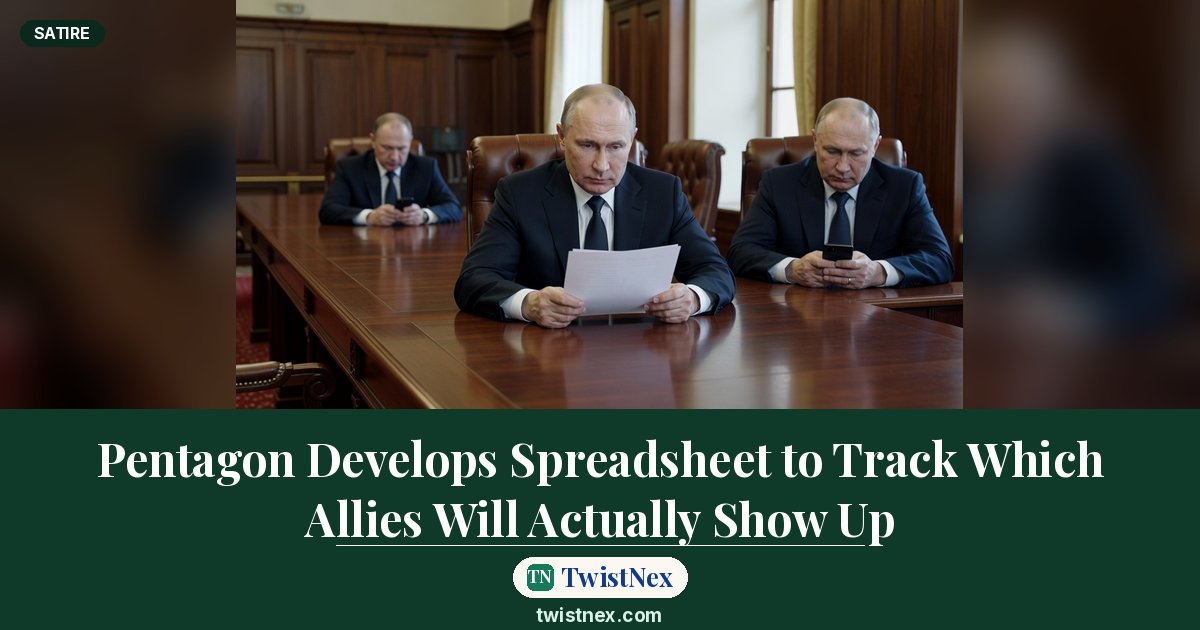
CIA Director John Ratcliffe arrived in Moscow this week to inform Russian officials that attacking NATO countries would be viewed unfavorably by the United States. The message was delivered during a meeting that also covered routine diplomatic topics including grain exports and the weather in the Black Sea.
A Kremlin spokesperson later described the warning as standard scare stories circulated by Western media outlets. The same spokesperson added that Russia already possessed several better scare stories of its own and did not require outside assistance.
Pentagon policy chief Elbridge Colby told European allies in Brussels that the continent had made progress on conventional defense but still needed clearer access agreements, additional basing rights, and a shared spreadsheet tracking who would actually show up if anything happened. He noted that further U.S. troop reductions remained under consideration pending those spreadsheets.
Colby cited the requirement for improved coordination, faster decision-making, and fewer instances of member states asking for American air support while simultaneously refusing overflight permissions. European defense ministers responded that they would form a working group to study the formation of another working group.
The Director of Managed Expectations at the State Department’s Bureau of Hypothetical Crises stated that such visits serve an important function even when the recipient country treats them as routine courtesy calls. He added that the alternative would be sending the warning by certified mail, which carries its own logistical complications.
Russian officials confirmed the meeting occurred but declined to release the exact wording of the note, citing both security protocols and a general policy against preserving documents that might later embarrass the sender.