Hackers Spend Six Years Inside Federal Systems Reviewing Unanswered Password Resets
Satire: TwistNex is a satirical publication. This is fiction inspired by real news. Quotes, experts and statistics are invented and must not be cited as fact.
U.S. government finally notices hackers who spent six years inside its servers doing literally nothing
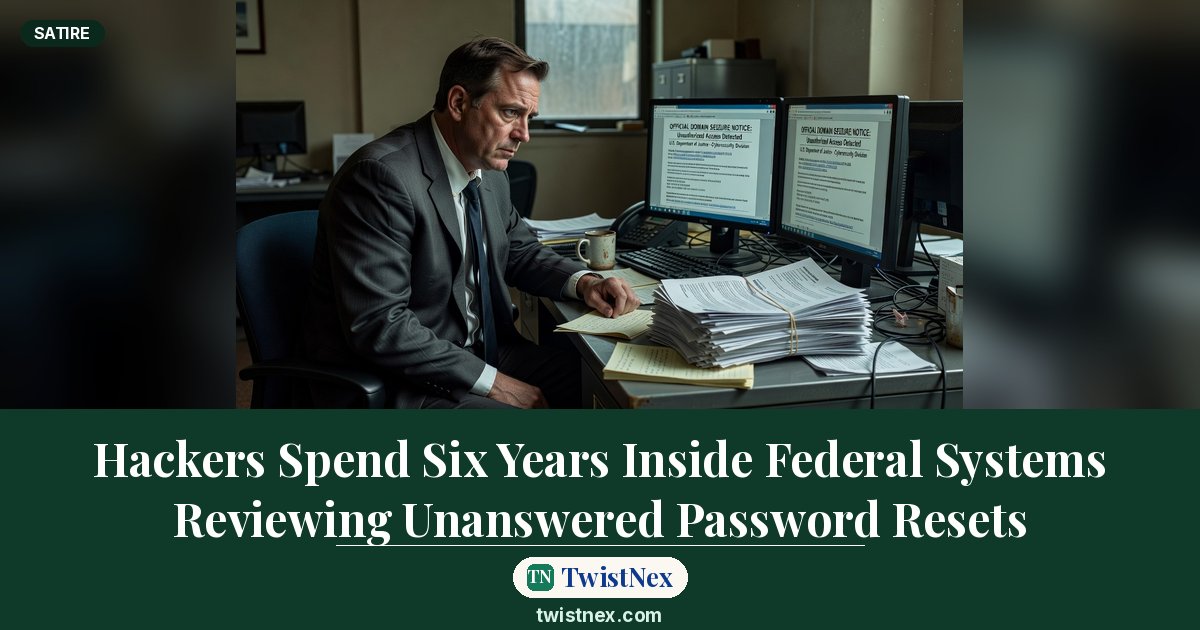
The Justice Department seized two domains this week that Chinese-linked hackers allegedly used to linger inside NASA, Senate, and other federal networks with almost nothing to show for it.
Officials described the intrusions as persistent yet oddly polite, noting the actors spent most of their time reviewing password reset emails that went unanswered for years. A spokesperson for the Cybersecurity and Infrastructure Security Agency called the activity "low-effort reconnaissance" conducted by operators who appeared more curious than ambitious.
Dr. Lena Voss, Deputy Director of Prolonged Network Loitering at the National Risk Assessment Office, said the hackers treated federal systems like a public library they never had to return books to. She added that the domains had been registered through shell companies whose only other asset was a single expired parking ticket from 2017.
Agency logs showed the intruders accessed an internal NASA portal containing decades-old mission briefings and a Senate staff directory that still listed several aides who retired during the Obama administration. Investigators found no evidence of data exfiltration, only repeated logins at 3 a.m. followed by immediate inactivity.
The domains themselves resolved to generic holding pages until the seizure notice appeared, at which point both pages displayed the standard government warning in Comic Sans. Federal technicians later confirmed the pages had never been updated because no one in the contracting office remembered the login credentials.
A senior Senate technology aide, speaking on condition of anonymity, admitted the breach only surfaced after an intern tried to reset a forgotten password and received an error message in Mandarin. The aide added that the IT department has since formed a working group to study whether the hackers might still be logged in somewhere.
Justice officials declined to name the domains, citing ongoing operational security concerns and the fact that both URLs now redirect to the same 404 page used for every other federal cybersecurity announcement.