Law Firm Withholds Benzene Report to Protect Residents From Unrealistic Settlement Hopes
Satire: TwistNex is a satirical publication. This is fiction inspired by real news. Quotes, experts and statistics are invented and must not be cited as fact.
Lawyers found a report so bad they decided residents shouldn't read it until after signing.
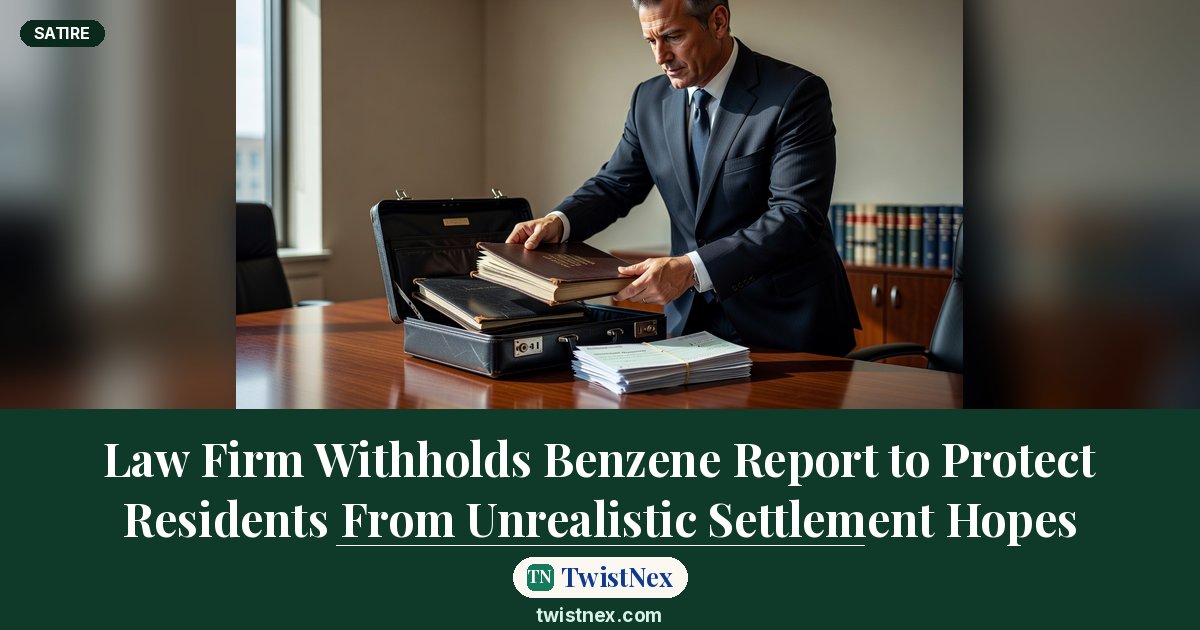
Lawyers handling the East Palestine class-action settlement withheld their own expert's environmental report after it listed benzene levels high enough to require airport hazmat protocols.
The 87-page document was completed in 2023 but never shown to residents. One internal memo described the data as likely to produce "unrealistic expectations regarding settlement figures."
Instead, the legal team presented a shorter summary citing only surface-water readings. Residents were told the full file contained nothing that would change their decision. The withheld version also included soil core samples from 14 residential properties and noted elevated readings inside two homes.
A partner at the lead firm later described the choice as standard risk management. "We have an ethical duty to prevent clients from rejecting reasonable offers based on incomplete context," the partner told colleagues in an email obtained by the plaintiffs.
The report finally surfaced when a former associate turned it over during a separate ethics review. It measured several compounds in concentrations that would trigger federal Superfund listing at most industrial sites.
"Our process was thorough and client-centered," said the firm's director of managed expectations. "Additional pages rarely improve outcomes once checks are printed."
Residents who already signed releases said they are now exploring whether to challenge the agreements on grounds the withheld data constituted material information.
The same lawyers have since filed a motion asking the court to seal the report again, citing ongoing settlement negotiations and a need to protect proprietary sampling methods.