Officials Monitor 40,000 Heat Deaths With One Thermometer Kept in Locked Drawer
Satire: TwistNex is a satirical publication. This is fiction inspired by real news. Quotes, experts and statistics are invented and must not be cited as fact.
England's official heat response is now 'think about snow and keep the font larger'
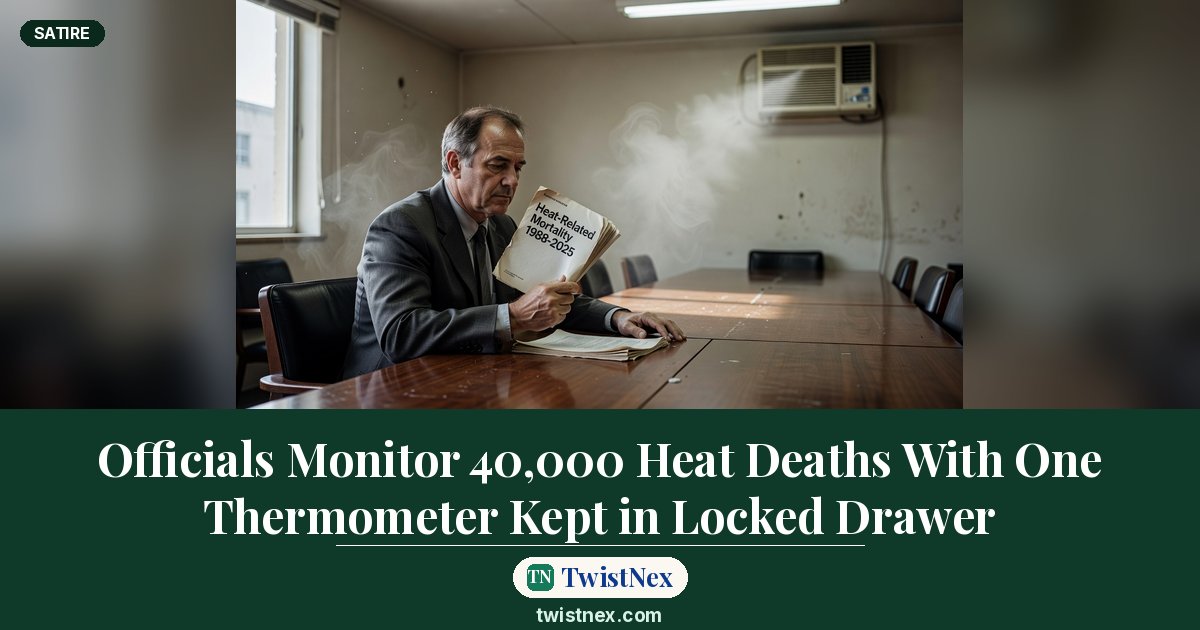
The Office for National Statistics tallied 40,000 extra deaths on England's hottest days from 1988 onward and released the findings on a Wednesday that reached 31 degrees. A spokesman for the Department of Mild Discomfort described the trend as "statistically noticeable but not the sort of thing requiring immediate forms in triplicate."
Health Secretary delegates responded by issuing a 47-page guidance leaflet that listed three approved cooling methods: standing near an open window, drinking water from a glass no larger than 300ml, and thinking about snow. The leaflet omitted any reference to insulation upgrades or emissions cuts, citing "ongoing consultation with the Office of Things That Might Cost Money."
A senior civil servant at the newly created Agency for Weather That Is Warmer Than Expected told reporters the department would monitor future summers by purchasing one additional thermometer. When asked whether the device would be calibrated, the official replied only that it would be stored in a locked drawer until the next budget cycle.
Local authorities in the hottest regions announced they would extend pub garden hours by fifteen minutes on days above 28 degrees while maintaining existing restrictions on tree planting. A council spokesperson explained the policy balanced resident welfare with the need to avoid "creating shade that could confuse passing motorists."
This summer's projected death toll is already on track to exceed prior records. A memo circulated within the Cabinet Office instructed staff to prepare for increased email traffic by raising the font size on out-of-office replies from 11 to 12 points.
Prime Minister's spokesperson confirmed the government would continue to treat extreme heat as a scheduling issue best handled by individual citizens adjusting their own thermostats.