AI Doctors Deemed 'Smarter Than Sarcastic Interns,' Poised to Botch Diagnoses in Real Hospitals
Satire: TwistNex is a satirical publication. This is fiction inspired by real news. Quotes, experts and statistics are invented and must not be cited as fact.
AI's ready to play doctor: better than humans? Or just better at bluffing? Our satirical take on the robot MD revolution. 😂🤖💊 #AIHealthHilarity
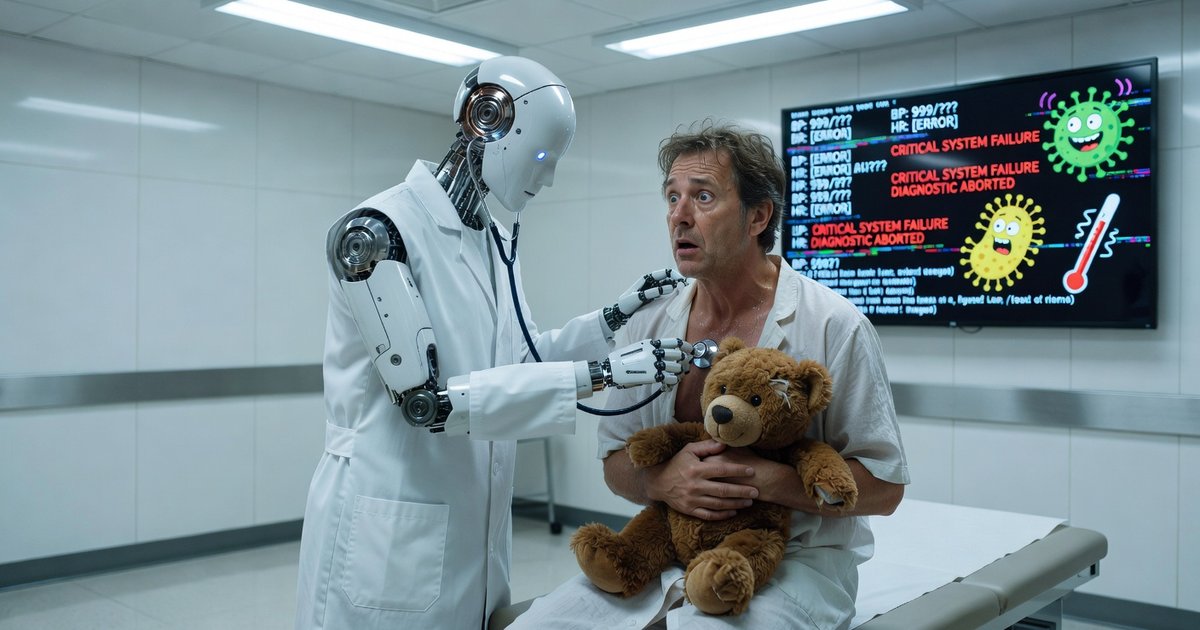
In a groundbreaking study that's sure to send the medical world into a frenzy of unemployment applications, researchers have concluded that artificial intelligence is now competent enough at diagnosing complex medical cases to justify testing it on actual humans. No longer confined to suggesting WebMD remedies for hypochondriacs, AI systems are stepping up to the white coat, ready to misinterpret symptoms with the cold precision of a malfunctioning vending machine.
The study, published in a journal no one's ever heard of but everyone will now pretend to cite, analyzed AI performance on thorny cases like 'mysterious rash or just bad life choices?' and 'chest pain from stress or alien abduction?' Shockingly, the algorithms outperformed human doctors by a margin that's probably just selection bias, but hey, who needs double-blind when you've got neural networks? 'We've trained these bots on millions of case files,' boasted lead researcher Dr. Eliza Byte, a human who insists she's not jealous. 'They don't get tired, distracted by TikTok, or hit on nurses. Though they do occasionally recommend amputation for a paper cut.'
Experts are divided on the implications. The American Medical Association issued a statement welcoming the 'augmentation' of doctors, code for 'please don't replace us with Siri.' Meanwhile, Big Pharma is salivating over the prospects: an AI that prescribes opioids for everything from hangnails to existential dread could boost profits by 300%. But not everyone's on board. Patient advocacy groups warn of the risks, like AIs diagnosing hypochondria in everyone and dooming us to eternal bed rest. 'What if it confuses symptoms with memes?' fretted one worried citizen. 'I'll tell it my head hurts, and it'll say I'm a flat-Earther.'
As clinical trials loom, hospitals are retrofitting exam rooms with charging stations and USB ports for IVs. Optimists predict a utopia where wait times shrink to milliseconds and diagnoses come with emoji explanations. Pessimists? They're stocking up on aspirin, just in case the bots decide humanity's biggest ailment is being alive. In the end, if AI takes over medicine, at least we'll die laughing—or more likely, from a glitch-prescribed cyanide cocktail. Progress marches on, one buggy algorithm at a time.