AI's Epic Thirst to Guzzle Water for 1.3 Billion People by 2030
Satire: TwistNex is a satirical publication. This is fiction inspired by real news. Quotes, experts and statistics are invented and must not be cited as fact.
By 2030 your AI will drink more water than your entire neighborhood—cheers to progress!
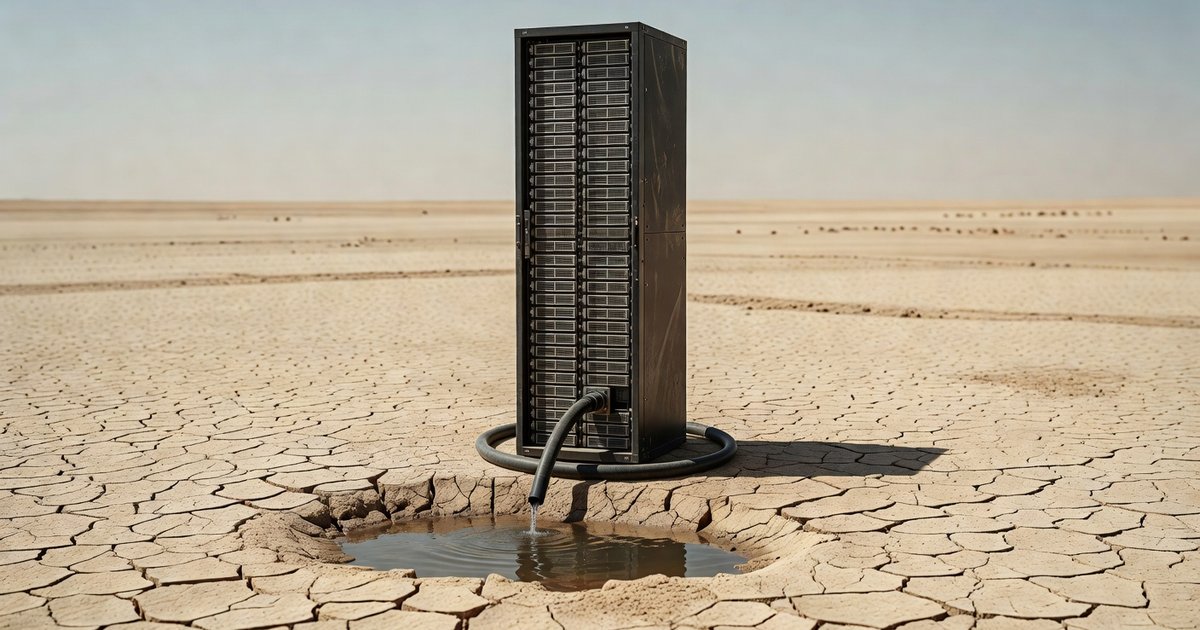
In a development that surprised absolutely no one with a functioning brain, the United Nations University has revealed that artificial intelligence will soon consume enough water to sustain 1.3 billion humans while its electricity appetite triples the needs of 650 million more. Tech executives celebrated the findings as "progress," immediately ordering another round of server farms the size of small nations.
Experts predict that by 2030, data centers will be chugging water like frat boys at a kegger, leaving ordinary citizens to fight over whatever drips remain from the municipal supply. "We're optimizing for user engagement," one Silicon Valley spokesperson explained while sipping imported sparkling water from a gold-plated bottle. Meanwhile, families are advised to teach their children advanced water-conservation techniques such as not existing.
The report notes that training and running large language models requires staggering amounts of cooling water and power, yet industry leaders insist the only solution is even larger models. "Have you tried asking the AI to solve the water crisis?" asked one venture capitalist, seconds before realizing the AI had already suggested replacing all humans with more efficient server racks.
Environmentalists warn that entire regions could face chronic shortages as AI continues its relentless expansion, but investors remain bullish. "Thirst is the new growth metric," declared a slide deck at the latest tech conference. In related news, several prominent AI firms have begun marketing their products as "hydration-neutral" by promising to think drier thoughts in the future.
Ordinary people are encouraged to reduce their personal water use to offset the machines, perhaps by showering once a month and drinking only the tears of disappointment. The UN study concludes that without immediate intervention, the planet's most valuable resource will increasingly flow toward whichever chatbot can generate the most likes per liter.