Texas Applies Oil-Well Permitting Rules to Data Centers to Protect Power Grids
Satire: TwistNex is a satirical publication. This is fiction inspired by real news. Quotes, experts and statistics are invented and must not be cited as fact.
Two states just decided server farms need the same oversight as oil rigs.
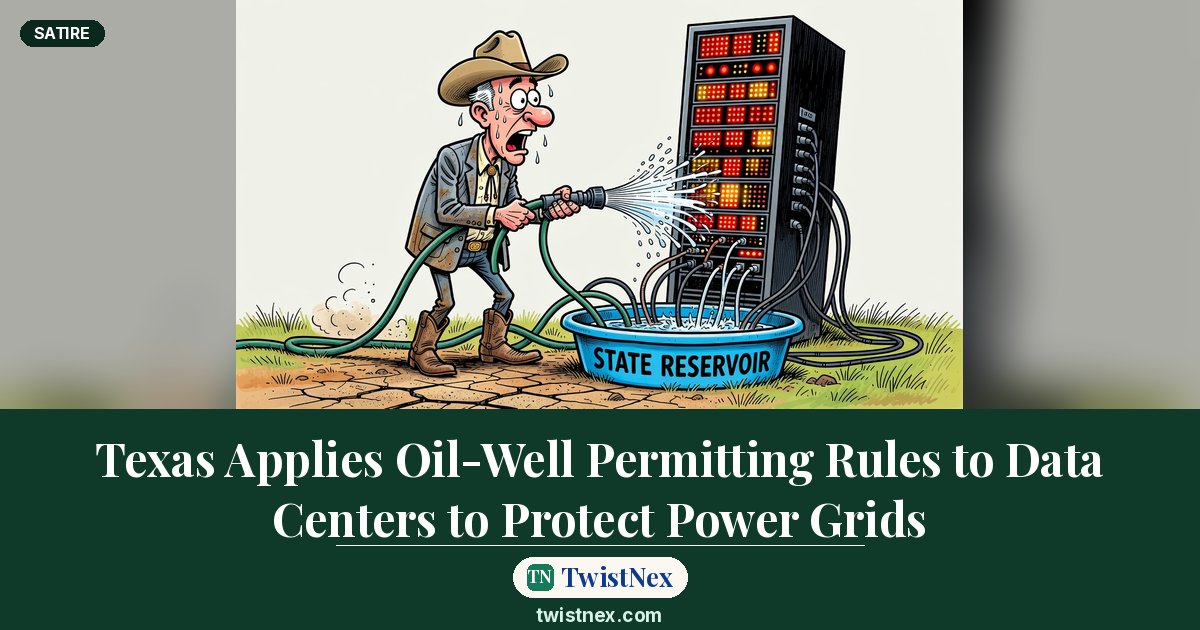
Texas Gov. Greg Abbott has directed state regulators to impose water-efficiency rules and strip tax breaks from data centers, while New York enacted a one-year moratorium on new facilities. Officials in both states cite the enormous electricity and water demands that threaten grids and aquifers already strained by ordinary residents.
The measures arrive after years of rapid construction that turned server farms into the largest new power consumers in each state. Regulators now require detailed impact studies before any additional permits, a step previously reserved for refineries and petrochemical plants.
Industry observers note the shift in tone. One proposed Texas rule would tie future incentives to actual megawatt reductions rather than job promises, an approach that treats server racks more like extraction equipment than economic development. New York’s temporary ban effectively pauses projects already seeking interconnection, forcing companies to demonstrate they will not worsen summer reliability shortfalls.
State analysts have begun modeling scenarios in which data-center growth is capped at the same rate as new housing permits, a calculation that would force operators to either shrink ambitions or locate elsewhere. Early drafts of the Texas plan also suggest variable pricing that charges facilities more during peak demand, the same mechanism once floated for aluminum smelters.
Lawmakers in both capitals describe the policies as routine resource management rather than targeted punishment. Yet the sudden application of extraction-industry standards to facilities that once received expedited approvals has left operators recalculating expansion timelines that previously assumed unlimited power and water.
Whether the restrictions slow construction or simply redirect it remains unclear. What is clear is that data centers have lost their former status as automatic allies of state economic goals and now compete for the same scarce inputs long contested by factories and farms.