Senate Committee Advises Troops to Treat Deployments as Primary Family Planning Tool
Satire: TwistNex is a satirical publication. This is fiction inspired by real news. Quotes, experts and statistics are invented and must not be cited as fact.
Senate keeps its own IVF coverage while ensuring troops continue relying on hope, luck, and private savings.
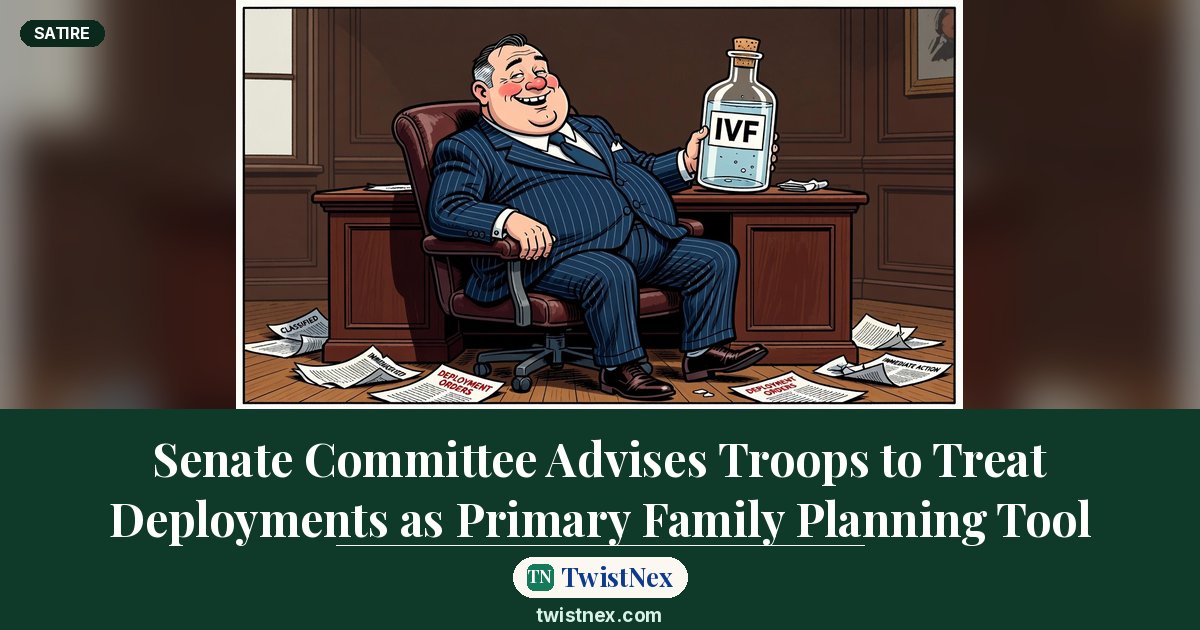
The Senate Armed Services Committee has once again demonstrated its firm belief that fertility coverage is a perk best reserved for people who write the rules rather than those who enforce them abroad. During markup of the annual defense policy bill, members quietly removed a provision that would have given service members and their families the same in vitro fertilization access already standard for lawmakers.
Committee aides described the move as a necessary clarification of priorities. "Lawmakers face unique pressures to maintain generational continuity in public service," one staffer explained, noting that congressional health plans have quietly covered multiple cycles of IVF since 2018. Military families, by contrast, were advised to treat deployment schedules as their primary family-planning tool.
The decision arrives at a moment when recruitment shortfalls are widening. Internal Pentagon modeling now includes a new variable: the out-of-pocket cost of fertility treatment as a deterrent to enlistment. Analysts at the Center for Elite Demographic Stability estimate that congressional IVF usage has risen 380 percent since benefits expanded, while active-duty coverage remains limited to cases involving specific service-related injuries.
Sen. Tammy Duckworth's effort to align military benefits with congressional ones was rejected without recorded dissent. Supporters of the status quo argued that extending coverage would create unsustainable demand and distract from core readiness missions. One retired general, now consulting for a defense contractor, suggested troops might instead explore "legacy planning" through extended family networks or accelerated promotion tracks that reduce time away from home.
The policy leaves the armed forces in the familiar position of modeling sacrifice while Congress models access. Lawmakers have not indicated when, or whether, the disparity will be revisited before the next election cycle.