Judge Blocks $1.8 Billion Fund for Aides Who Lost One Night of Sleep
Satire: TwistNex is a satirical publication. This is fiction inspired by real news. Quotes, experts and statistics are invented and must not be cited as fact.
Federal judge still unconvinced that Trump’s $1.8B victim-compensation fund is actually dead, extends the block anyway.
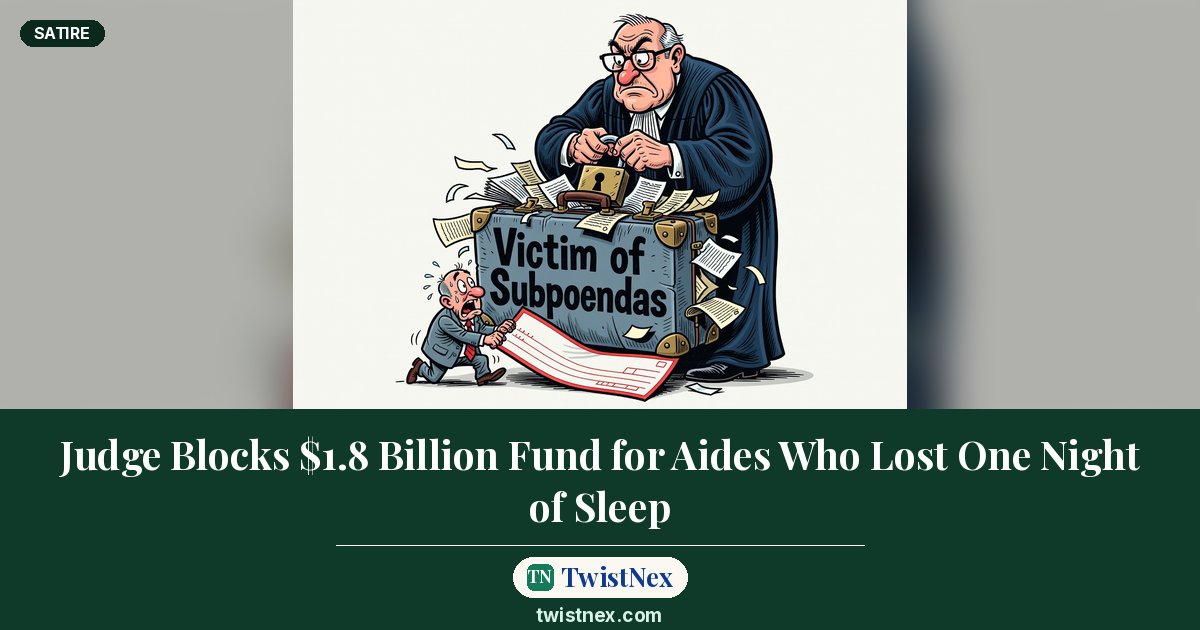
A federal judge in Virginia has extended her order blocking the Trump administration’s $1.8 billion “anti-weaponization” compensation fund, ruling that repeated administration assurances the program was already dead failed to reassure the court.
The fund was created to settle the president’s long-running lawsuit against the IRS over the 2019 leak of his tax returns and to pay citizens deemed victims of government overreach. Administration officials described the pool as a narrow remedy for whistleblowers and small businesses harmed by federal agencies. Critics called it a slush fund that would mainly reimburse political allies for legal bills and negative press.
Judge Leonie Brinkema wrote that the Justice Department’s public statements had been “inconsistent at best,” leaving open the possibility that payments could resume without further court review. The decision keeps the money frozen while Democracy Forward’s lawsuit challenging the fund’s legality proceeds.
Inside the administration, aides are already modeling how the blocked money might have been spent. One internal slide deck, obtained by reporters, lists hypothetical payouts to officials who spent more than 40 hours responding to congressional subpoenas, former aides who endured unflattering book chapters, and any cabinet secretary who lost a single night of sleep over a special counsel inquiry.
The judge’s ruling has prompted fresh legal creativity. Lawyers for the administration now argue that blocking the fund itself constitutes a new form of weaponization, creating a meta-victim category eligible for future compensation once the current block is lifted. A senior official, speaking on condition of anonymity, said the department is “exploring whether judges who extend blocks on anti-weaponization funds should themselves be considered victims of weaponization.”
The case is scheduled for further hearings next month. Until then, the $1.8 billion remains in limbo—neither spent nor officially canceled—while the government continues to insist the entire dispute is about accountability, not money.