Finance Ministry Floats 'Reproduction Mode' to Disable Apps Between 8 P.M. and Midnight
Satire: TwistNex is a satirical publication. This is fiction inspired by real news. Quotes, experts and statistics are invented and must not be cited as fact.
New research finds the real reason birth rates are tanking: your phone is more interesting than your partner.
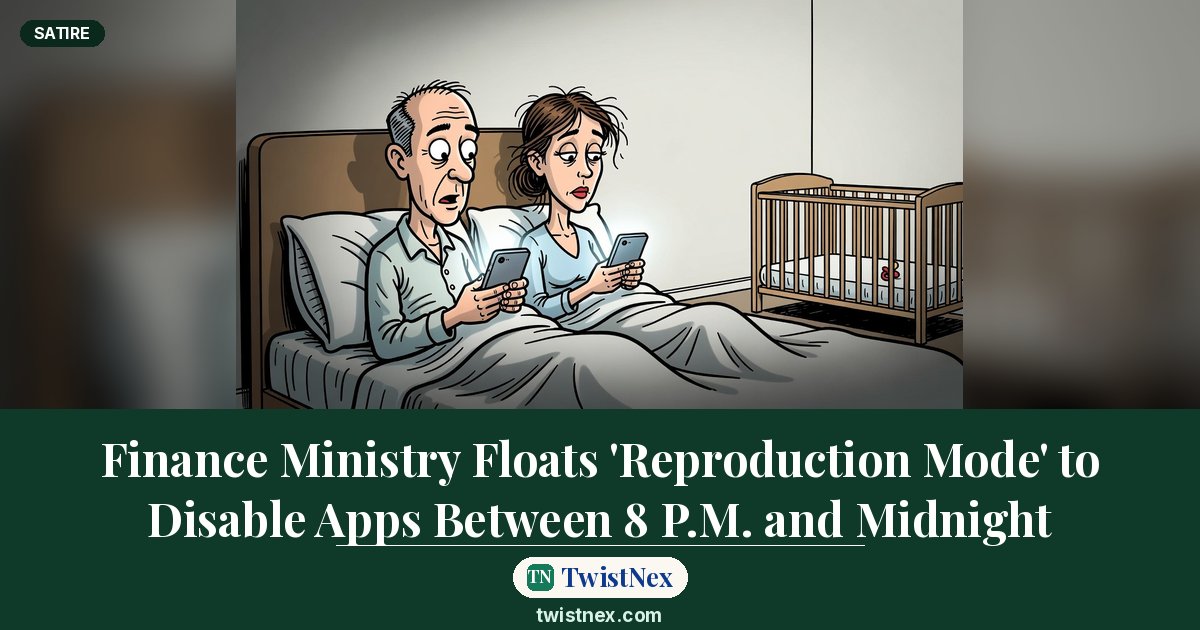
Researchers at several universities announced this week that prolonged iPhone use may be contributing to falling birth rates, a finding they presented with the same gravity usually reserved for climate reports.
The study suggests that the average user now spends more time inside notification centers than in conversations that could lead to offspring. One lead researcher noted that nightly rituals once involving eye contact have been replaced by silent scrolling through algorithmically optimized content until both parties fall asleep holding their devices.
Apple has not commented directly but is rumored to be exploring a software update that would gently remind users to put the phone down if their screen time exceeds typical courtship windows. Early internal tests reportedly showed the feature was ignored at rates higher than most battery warnings.
Governments already struggling with shrinking populations are examining new policy options, including subsidies for couples who agree to place their phones in another room after 9 p.m. One finance ministry document floated the idea of a “reproduction mode” that would disable social media between 8 p.m. and midnight, though analysts expect strong resistance from both users and app developers.
Demographers have begun modeling scenarios in which entire future workforces are replaced by AI assistants because the humans who were supposed to produce them were busy clearing badge notifications. Early projections indicate that by 2040 the average family may consist of two adults, 1.2 children, and 4.7 active iPhones.
Public health officials are preparing awareness campaigns that will urge citizens to treat their devices like polite houseguests who should be asked to leave before intimate discussions begin. Whether anyone will notice the messaging remains the subject of further research.