U.S. Studies $12M Plan to Requisition Camping Stoves as Oil Reserve Hits 1983 Low
Satire: TwistNex is a satirical publication. This is fiction inspired by real news. Quotes, experts and statistics are invented and must not be cited as fact.
America’s emergency oil is so low that officials are now pricing out national candle reserves and bicycle generators.
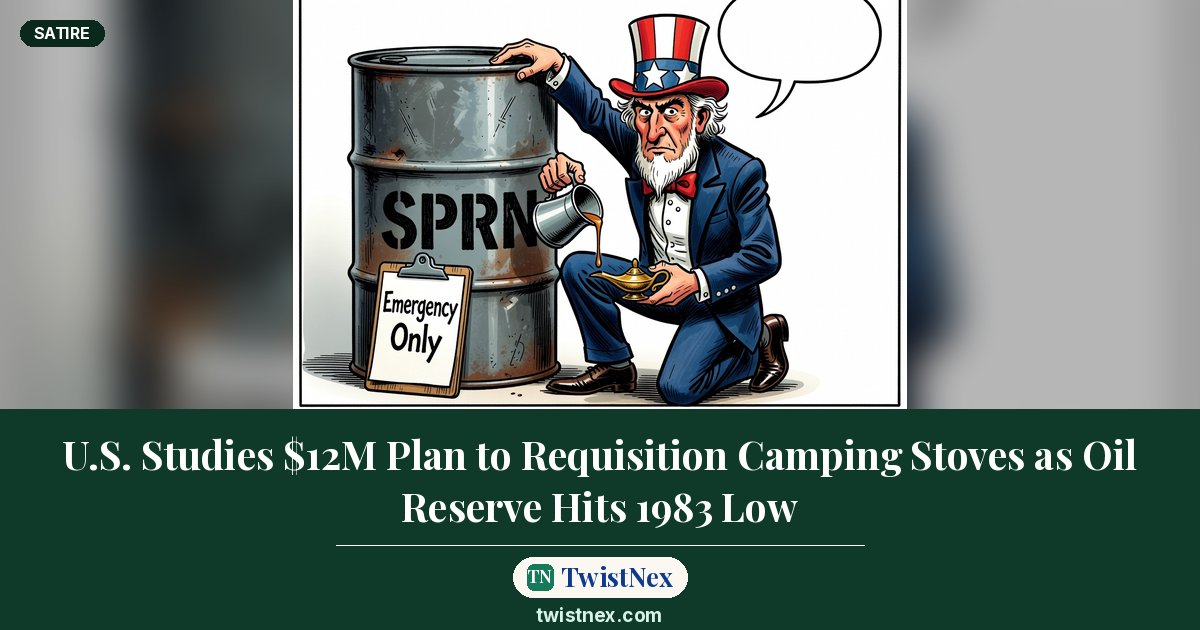
The U.S. Strategic Petroleum Reserve has fallen to 340 million barrels, its lowest level since the Reagan era, according to federal data released this week. Administration sources describe the drawdown as a routine adjustment rather than any cause for concern.
Energy Department spokespeople noted that remaining supplies are still sufficient to power the federal government’s backup generators for several weeks. One senior official, speaking on condition of anonymity, suggested that any shortfall could be met by “asking citizens to drive slightly less on weekends.”
Industry analysts have already begun modeling alternative emergency measures. A report from the Center for Forward-Looking Energy Scenarios proposes converting the reserve caverns into storage for industrial-grade candles and bicycle-powered generators. The center’s director, Dr. Harlan Witt, told reporters that “a well-organized lantern program could offset up to 3 percent of projected shortages if every household agrees to dim their lights after 9 p.m.”
Lawmakers have responded with characteristic urgency. A bipartisan group introduced the Lantern and Bicycle Infrastructure Resilience Act, which would allocate $12 million to study whether the Department of Defense can requisition camping stoves from national parks. The bill’s lead sponsor praised the measure as “proactive without being alarmist.”
International observers have taken note. Gulf producers reportedly offered to sell replacement barrels at premium prices linked to future congressional recesses, while European allies quietly updated their own contingency plans to include ration cards for olive oil. White House economists insist the current reserve level remains “within historical norms if you squint and ignore everything after 1984.”
For now, federal agencies are advised to keep nonessential vehicles fueled only on alternate Tuesdays. The public has been asked to treat the situation with the same calm previously reserved for routine updates about the national debt ceiling.