EU Redefines GDP to Count Café Tables and Strategic Depopulation
Satire: TwistNex is a satirical publication. This is fiction inspired by real news. Quotes, experts and statistics are invented and must not be cited as fact.
Europe’s economy is fine once you stop counting the things that aren’t fine, according to people paid to say exactly that.
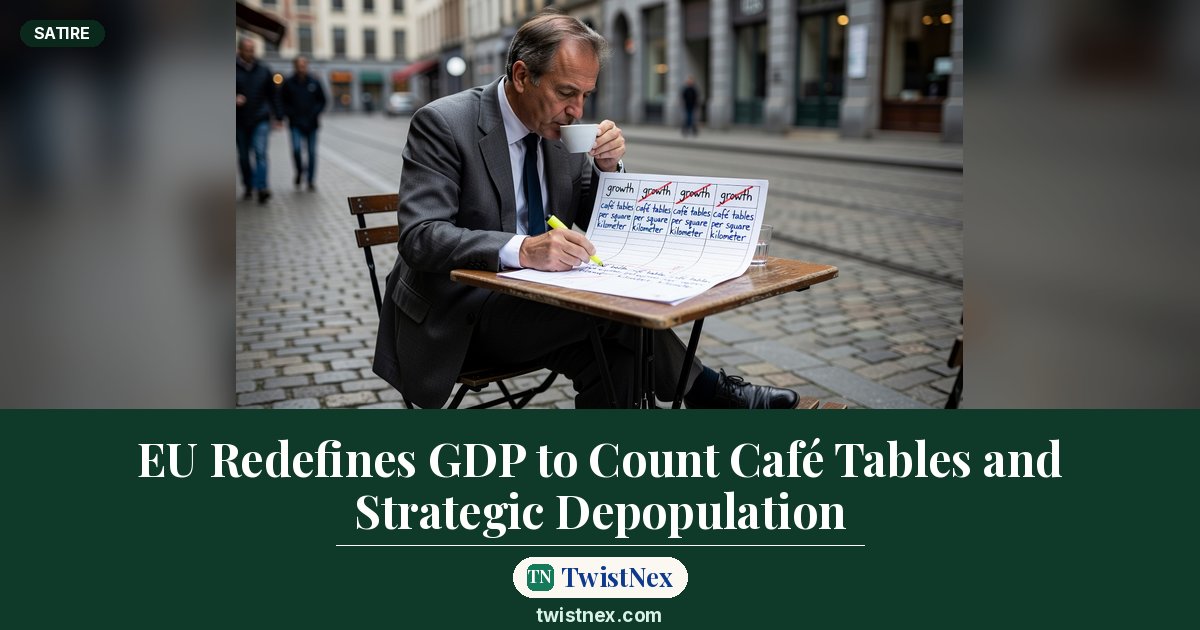
Economists at several major institutions announced this week that reports of European economic stagnation have been greatly exaggerated, largely because the continent has stopped measuring the things that make decline look obvious.
According to the new analysis, Europe continues to post respectable figures once one subtracts the awkward categories of productivity growth, defense spending, and young people who can afford housing. "We have simply adjusted the lens," explained a Brussels-based analyst who asked not to be quoted by name or at all. "When you count outdoor seating and paid vacation days as industrial output, the numbers improve dramatically."
Critics who point to sluggish growth, energy dependence, and demographic cliffs are now accused of using outdated metrics such as "actual results." In their place, officials recommend tracking variables like the ratio of public holidays to workdays and the number of committees formed to study committee formation.
A leaked internal memo suggested that further progress could be achieved by reclassifying population loss as "strategic depopulation for sustainability targets." One senior official reportedly celebrated the approach by scheduling a three-week fact-finding mission to a different café each afternoon.
American observers, meanwhile, expressed concern that Europe’s success at appearing fine might become contagious. "If this spreads," one Washington economist warned, "we’ll all have to pretend our problems are just different definitions of success." For now, however, the continent remains committed to the strategy that has served it well: looking extremely relaxed while the data quietly leaves the room.