NATO Chief Arrives for 45-Minute Talk on Which Parts of Europe Remain Insured
Satire: TwistNex is a satirical publication. This is fiction inspired by real news. Quotes, experts and statistics are invented and must not be cited as fact.
NATO’s top official heads to Washington to learn whether America’s security guarantee still comes with a receipt.
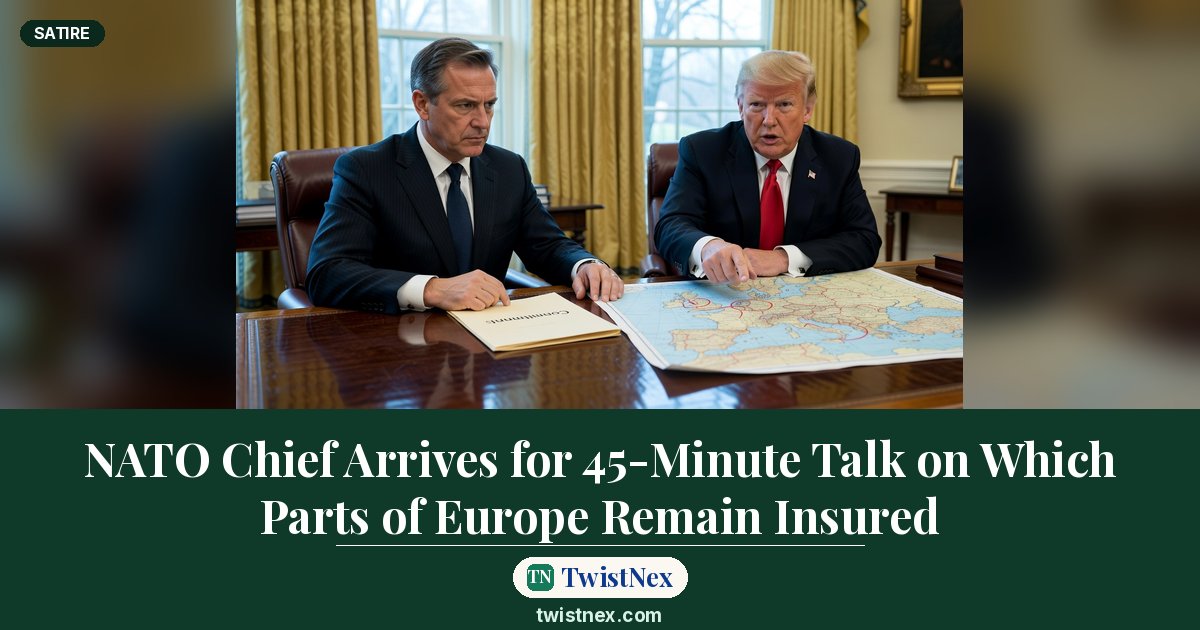
NATO Secretary-General Mark Rutte will arrive at the White House next week for what officials are describing as a routine discussion about alliance readiness. The meeting comes after the United States quietly adjusted downward the scale of forces it would automatically commit if a European member came under attack.
European diplomats have spent the past week calculating exactly how many brigades might still show up under the new guidelines. One internal memo reportedly compared the change to a fire-insurance policy that now covers only the kitchen and leaves the rest of the house to the policyholder’s imagination.
Administration sources insist nothing fundamental has shifted. “We remain committed to the security of our allies,” a senior official said, while declining to specify which allies or what level of security. The same official noted that any future request for assistance would be reviewed on a case-by-case basis, much like a restaurant that still lists lobster on the menu but only serves it when the manager feels like it.
Rutte is expected to arrive with a list of questions about response times, prepositioned equipment, and the meaning of the word “automatic.” White House schedulers have allotted forty-five minutes for the discussion, followed by a photo opportunity in the Rose Garden where both men will stand in front of a backdrop that reads “Stronger Together, Subject to Availability.”
Analysts tracking alliance cohesion say the real test will come not during the meeting but in the weeks afterward, when European governments begin updating their own defense budgets. Several capitals have already circulated draft plans that include both increased spending and a new line item labeled “hoping for the best.”
Rutte has said he looks forward to a “frank exchange.” Trump has said he looks forward to a productive conversation. Observers expect both statements to remain technically accurate regardless of what actually happens in the room.