Bolivia Declares Emergency to Restore Roads’ Right to Remain Free of Citizens
Satire: TwistNex is a satirical publication. This is fiction inspired by real news. Quotes, experts and statistics are invented and must not be cited as fact.
Bolivia treats its highways like hostages while citizens demand the president leave office.
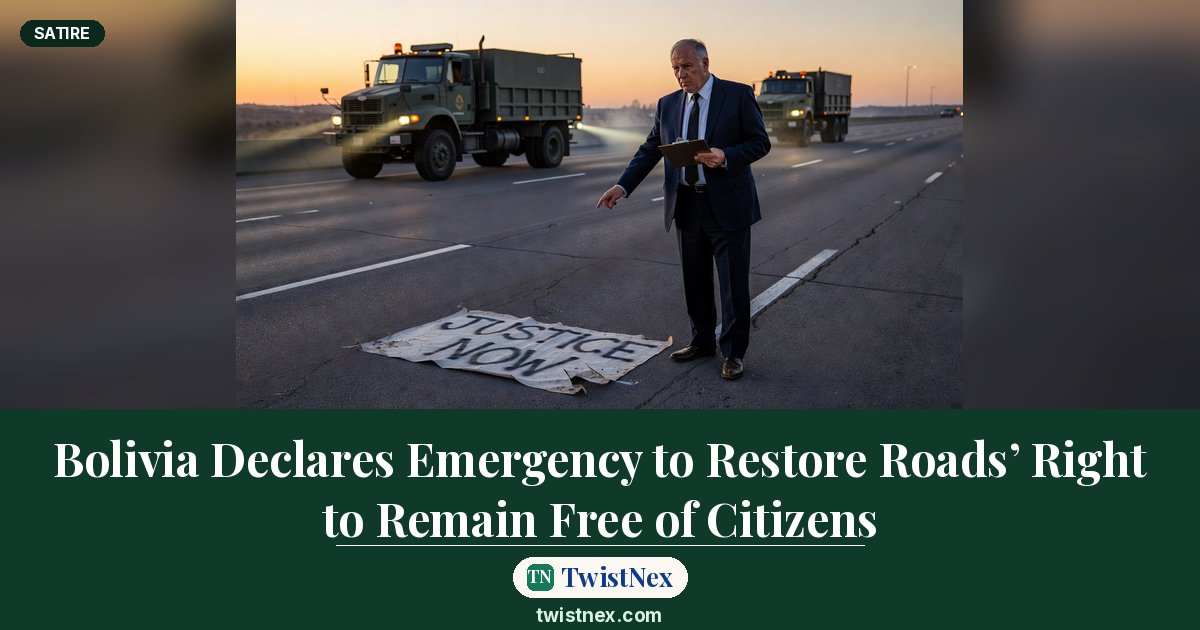
Bolivia’s government has declared a national state of emergency to liberate the country’s highways from the people using them to demand President Rodrigo Paz resign. Officials framed the move as a necessary step to restore the roads’ fundamental right to remain open for commerce and official travel.
The decree authorizes security forces to dismantle blockades that protesters have maintained for weeks across major routes. Paz stated the action would “free the country’s roads” so that everyday life could resume without the inconvenience of citizens expressing dissent in inconvenient locations.
Transport Minister Elena Vargas described the blockades as an unlawful occupation of state infrastructure. “These roads were built for the movement of goods and government vehicles, not for citizens airing grievances,” she said in a briefing. Vargas added that the emergency would allow crews to clear debris and restore “normal service,” including the normal service of not having to negotiate with demonstrators.
Opposition groups called the declaration an escalation that treats public protest as a security threat. Analysts noted that declaring emergencies to clear roads has become a recurring tactic when administrations face sustained demonstrations. One independent observer remarked that the policy effectively classifies any stationary citizen as a potential hazard to asphalt.
The measure has drawn quiet support from trucking associations, which reported lost revenue from delayed shipments. Government data projected that lifting the blockades could increase freight movement by as much as 40 percent within days, assuming the roads themselves do not file additional complaints about overuse.
Paz’s office indicated further measures may follow if protests continue, including expanded authority to designate additional stretches of pavement as critical national assets. The administration emphasized that protecting the roads remains its top priority while the question of who governs the country waits for clearer traffic conditions.